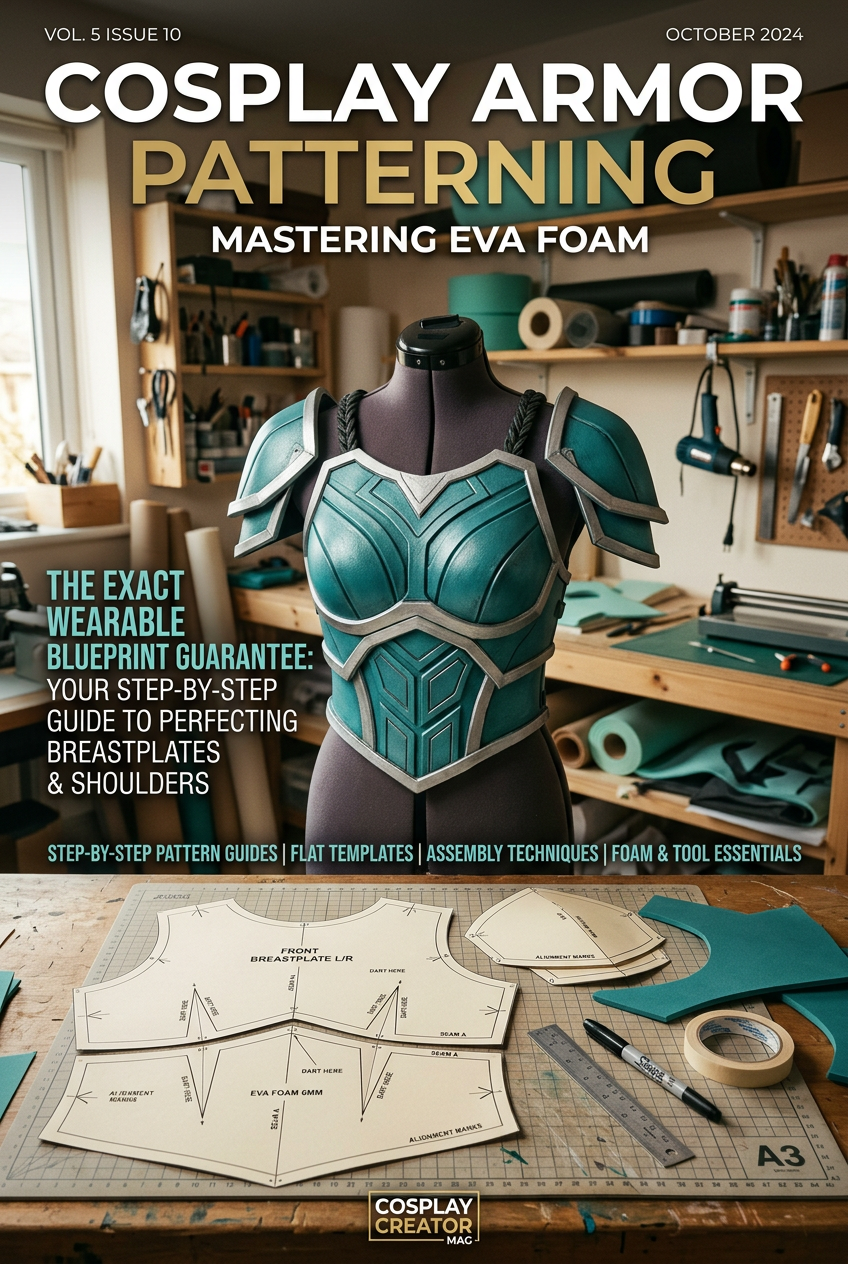
Introduction: The Core Art of Foam-Smith Patterning
In cosplay crafting communities, turning a 3D organic form—such as a chest plate, shoulder pauldron, or gauntlet—into flat 2D templates is the single most critical step of foam-smithing. As demonstrated in popular multi-part armor tutorials across platforms like TikTok, mastering an EVA foam armor pattern guarantees a tailored fit that moves comfortably with your body on convention floors.
Building high-density EVA foam cosplay armor requires converting 3D body curves into flat templates through "darting" (V-shaped cutouts that allow flat sheets to curve cleanly under heat). This guide breaks down the top pattern-drafting methods used by prop makers to create screen-accurate, comfortable armor.
Quick Comparison Table: Patterning Methods for EVA Foam Armor
| Patterning Technique | Primary Drafting Tools | Accuracy & Body Fit | Ideal Skill Level |
| 1. Plastic Wrap & Masking Tape | Plastic cling wrap, low-tack masking tape, permanent marker | High (Direct 1:1 tailored body duplicate) | Beginner to Intermediate |
| 2. Heavy Foil & Duct Tape | Heavy-duty aluminum foil, reinforced duct tape, hobby knife | Very High (Rigid shell for heavy plate structures) | Intermediate |
| 3. 3D Digital Unwrapping | Pepakura Designer, Blender, 2D printing paper | High (Exact 3D model scale translation) | Intermediate to Advanced |
1. Plastic Wrap & Masking Tape Body Shelling — The Gold Standard for Custom Form-Fitting Armor
Direct body wrapping remains the most popular, cost-effective method for drafting chest plates, greaves, and vambraces tailored directly to your measurements.
-
Core Process: Wrap the targeted body zone (such as your torso or arm) in 2–3 layers of plastic cling wrap. Cover the area with overlapping strips of paper masking tape. Draw your armor seam lines, center alignment marks, and dart relief cuts directly onto the tape shell using a permanent marker before carefully slicing the shell off along a primary seam.
-
Pros & Cons: Perfectly replicates your body proportions; requires an assistant to help wrap and draw lines on hard-to-reach areas like the back.
-
Best Suited For: Beginners crafting a knight armor cosplay DIY set or form-fitting superhero breastplates.
2. Foil & Duct Tape Rigid Armor Templating — High-Structure Heavy Plate Drafting
For bulky, layered pauldrons, oversized knee guards, or mecha armor, aluminum foil provides a rigid shell that holds its shape independently of body contours.
-
Core Process: Draping heavy-duty aluminum foil over padded base layers or mannequins creates a firm form. Cover the foil with duct tape to lock the shape in place. Draw your panel segments and cut relief darts to lay the pattern flat against cardstock paper.
-
Pros & Cons: Excellent structural rigidity that stands up on its own; slightly thicker shell material requires extra care when transferring seam lines to thin foam.
-
Best Suited For: Advanced armor builders constructing multi-layered fantasy pauldrons or heavy knight gorgets.
3. Digital Pepakura & 3D Unwrapping Software — Computer-Aided 2D Pattern Conversion
Digital patterning utilizes 3D mesh files unwrapped into printable 2D PDF templates, providing exact mathematical precision for complex game replicas.
-
Core Process: Load a 3D armor model (.OBJ or .STL) into 3D unwrapping software like Pepakura. Scale the digital mesh to match your body height and chest width, then unwrap 3D polygons into flat, printable paper sheets complete with registration alignment tabs.
-
Pros & Cons: Extremely precise for complex geometric shapes; requires access to a computer printer and basic software navigation skills.
-
Best Suited For: Prop makers recreating complex video game armor sets, sci-fi helmets, or intricate mechanical suits.
How to Select the Best Sourcing Supplies for EVA Foam Patterning
-
Match Foam Density to Armor Function: For main chest plates and pauldrons, select 6mm to 8mm high-density foam (100kg/m³ or higher) to maintain structural integrity. Reserve 2mm to 4mm foam sheets for intricate trims, raised filigree, and inner seam covers.
-
Utilize Moldable Foam Clay for Organic Accents: Instead of carving complex curves out of thick foam blocks, sculpt intricate details (such as lion heads, filigree, or horns) using air-dry moldable foam clay. Foam clay bonds seamlessly to high-density foam using contact cement.
-
Equip Essential Precision Tools: Stock up on fresh 45-degree utility blade refills, a variable-temperature heat gun, contact cement, and high-density foam sheets. Explore our catalog for EVA foam cosplay armor supplies to stock your workshop!
Conclusion
Mastering pattern drafting is the foundational key to building impressive, comfortable cosplay armor. By transferring taped body shells onto paper, cutting strategic darts, and transferring templates to high-density EVA foam sheets, you can bring any fantasy or historical design to life. Head over to our catalog to stock up on premium EVA foam cosplay armor supplies and start your next build today!
What specific armor piece or character build would you like to pattern next? I can help break down specific dart placements, seam angles, or material thickness recommendations for your project.

Leave a comment
This site is protected by hCaptcha and the hCaptcha Privacy Policy and Terms of Service apply.