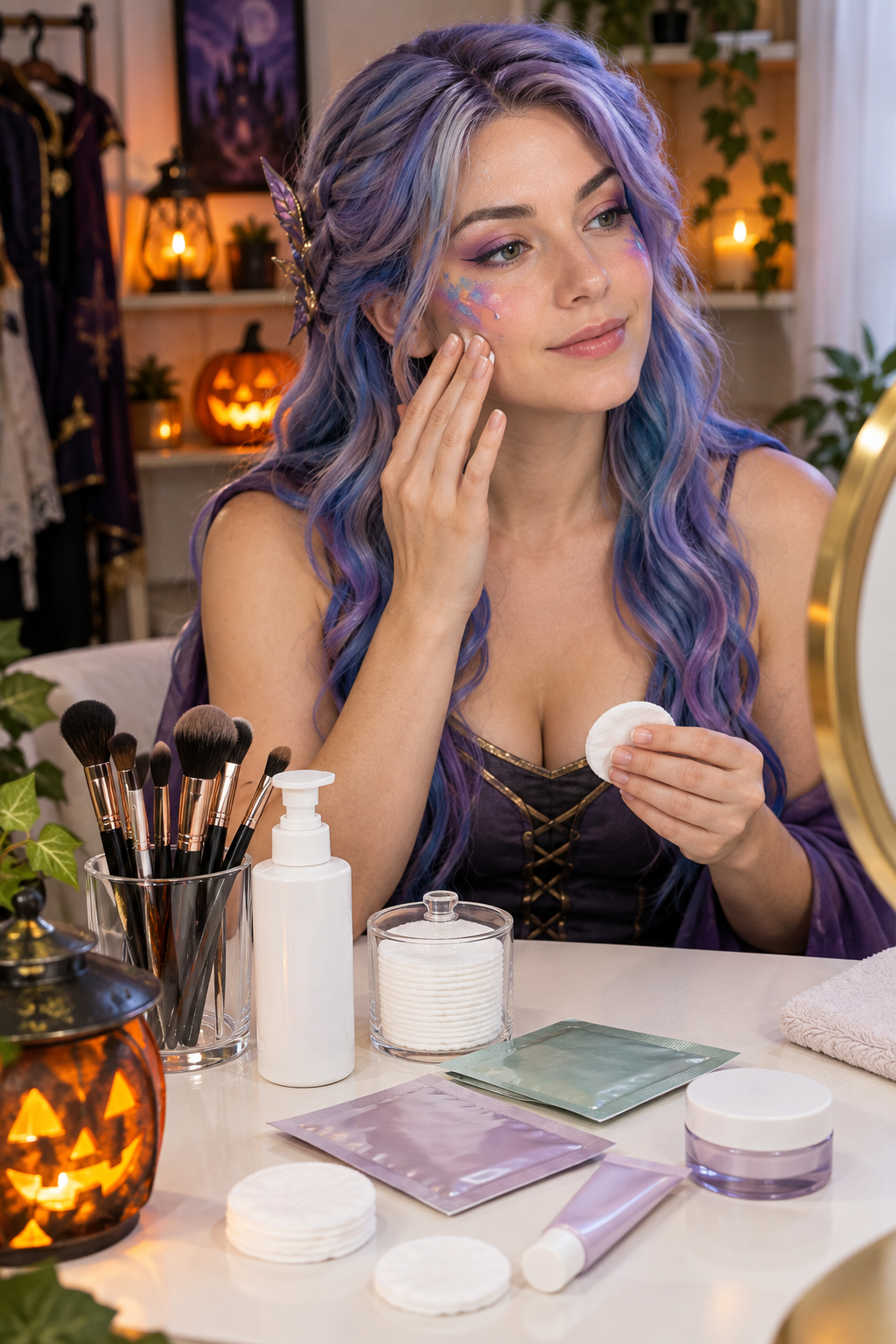
Introduction: Tutorial Goals & Preparation Checklist
Transforming into your favorite character using complex cosmetics is a Halloween tradition, but heavy products can trigger severe allergic contact dermatitis or chemical burns if applied carelessly. Backed by guidance from Baylor College of Medicine and Saint Louis University dermatology experts, this tutorial ensures your skin stays healthy under layers of theatrical paint.
-
Tutorial Goals: Learn how to properly patch test theatrical cosmetics, select hypoallergenic formulations, and remove heavy stage makeup without damaging your skin barrier.
-
Preparation Checklist:
-
Hypoallergenic water-based face paints (avoid black henna tattoos).
-
Gentle, fragrance-free micellar water or cleansing balm.
-
Fresh, unopened makeup sponges and single-use applicators.
-
Medical tape and clean cotton pads for patch testing.
-
Step 1: Performing a Pre-Application Patch Test (24–48 Hours Prior)
Never apply a brand-new theatrical pigment or latex adhesive directly to your entire face on the night of an event.
-
The Patch Test Routine: Apply a small amount of your chosen face paint or eyelash adhesive to your inner forearm (as recommended by SLU dermatologists), cover it loosely with a bandage, and wait 24 to 48 hours.
-
Monitoring Reactions: Watch for redness, swelling, itching, or blistering. If any reaction occurs, discard the product immediately. Furthermore, dermatologists advise throwing away leftover Halloween makeup from previous years to prevent bacterial contamination.
Step 2: Selecting Safe Face Paints and Hypoallergenic Formulas
Choosing the right chemical formulation dictates how your skin reacts during long convention or party hours.
                  [ COSMETIC SELECTION & SAFETY HIERARCHY ]

  [ Base Selection ]    --> Opt for water-based, FDA-compliant theatrical paints over oil-heavy greases.
            │
            v
  [ Adhesives ]         --> Avoid cheap eyelash glues and black henna body art (high allergy risks).
            │
            v
  [ Apparel Check ]     --> Pair makeup with breathable cotton layers rather than scratchy synthetics.
-
Prioritize Water-Based Pigments: Water-based face paints wash off easily and clog pores far less frequently than heavy wax or oil-based alternatives.
-
Beware of Hidden Irritants: Avoid black henna temporary tattoos, which often contain paraphenylenediamine (PPD) and can cause severe chemical burns. Additionally, ensure your cosplay face paint safety standards extend to your wardrobe; dermatologists note that stiff synthetic clothing fibers can chafe irritated skin, so wearing soft cotton base layers is recommended.
Step 3: Gentle Removal Techniques and Hygiene Protocols
The way you take off your transformation is just as important as how you put it on.
-
Gentle Dissolving: Saturate a cotton pad with fragrance-free micellar water or a gentle cleansing balm. Press it gently against heavy pigment zones and let it dissolve the makeup before wiping.
-
Avoid Aggressive Scrubbing: Never scrub your skin raw with rough washcloths. Finish by moisturizing with a barrier-repair cream. To explore more advanced cosmetic techniques—such as crafting striking looks inspired by our previous how to safely use cosplay makeup guides—always prioritize clean tools and never share eye makeup or brushes with friends.
Troubleshooting & Common Skin Irritation Pitfalls
-
Pitfall 1: Using Expired or Shared Products. Old tube paints harbor mold and bacteria after a single season. Solution: Buy fresh supplies annually and maintain strict personal hygiene.
-
Pitfall 2: Harsh Eyelash Glues. Discount costume store lash adhesives frequently trigger contact dermatitis around sensitive eyelid skin. Solution: Invest in medical-grade or hypoallergenic lash glue from trusted pharmacy brands.
-
Pitfall 3: Post-Party Breakouts. Sleeping in heavy costume paint suffocates pores. Solution: Always complete a thorough double-cleansing routine before bed, no matter how late the party ends.
Conclusion & Related Steps
Mastering cosplay makeup safety ensures you can enjoy conventions and Halloween parties without dealing with painful skin rashes or allergic flare-ups.


Leave a comment
This site is protected by hCaptcha and the hCaptcha Privacy Policy and Terms of Service apply.