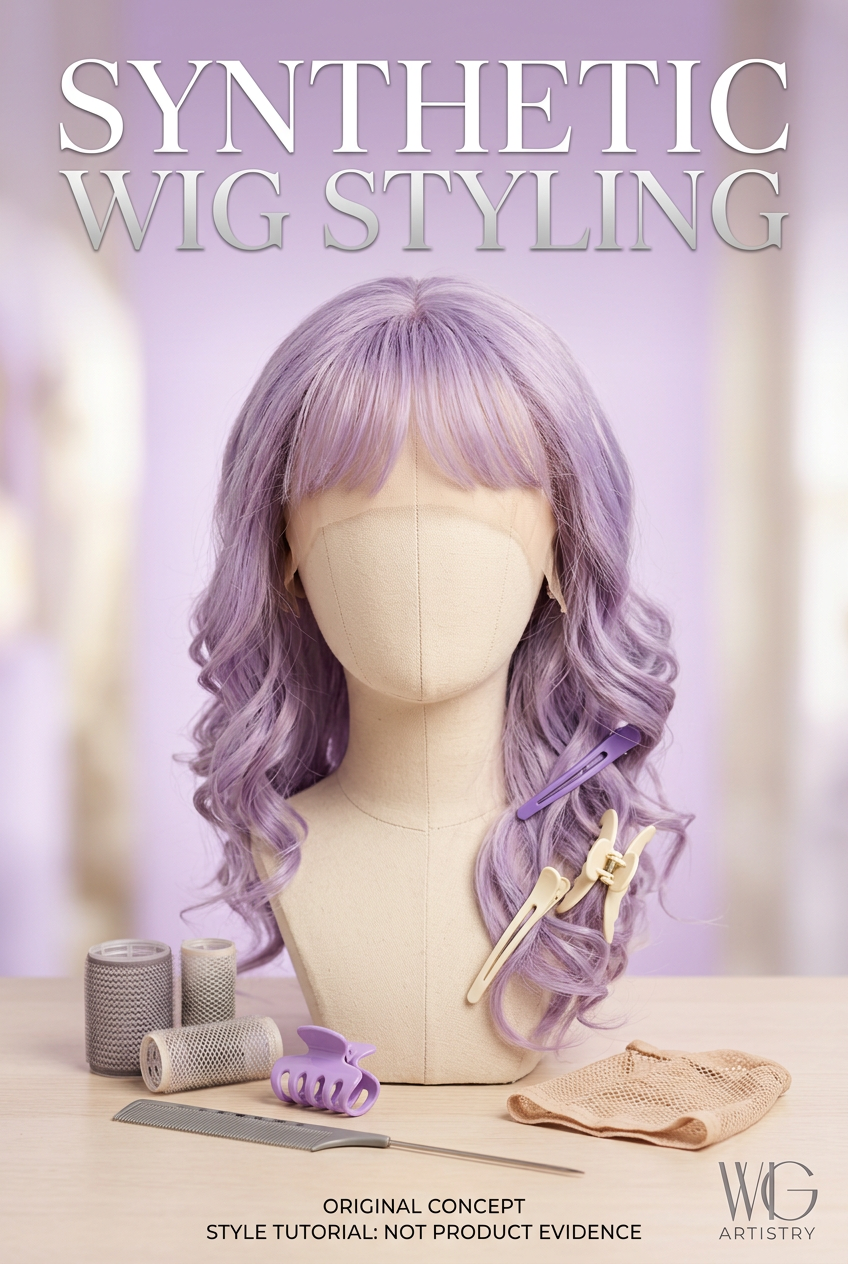
Introduction: Unlocking Confidence in Wig Styling
Styling your first synthetic wig is one of the most exciting milestones in cosplay. As demonstrated in viral TikTok tutorials, achieving a camera-ready, natural look does not require years of hair-dressing experience. With a few foundational techniques—such as securing your natural hair beneath a lace front cosplay wig, point-cutting blunt bangs, and using low heat to set curls—you can transform any base wig into a character-accurate masterpiece.
This beginner guide breaks down the essential steps to prep, fit, trim, and curl synthetic fibers without damaging your wig.
Before starting your styling session, assemble your beginner tool kit:
-
Application Essentials: Breathable wig cap, velvet or silicone wig grip band, spirit gum or lace front wig tape, and rubbing alcohol.
-
Trimming Tools: Stainless steel thinning shears, hair razor comb, sectioning clips, and a Styrofoam headform with a desk clamp.
-
Curling & Setting: Low-heat curling iron or steamer, plastic hair rollers, duckbill clips, and extra-firm holding spray.
-
Base Fiber: High-density, heat-resistant beginner-friendly cosplay wigs for sale.
Step 1: Prepping Hair & Applying a Lace Front Cosplay Wig
A seamless cosplay transformation begins with a flat, secure base that prevents slipping and conceals natural hairlines.
-
Flatten Natural Hair: Braid natural hair into small Dutch/French cornrows or pin pin-curls flat against your scalp using bobby pins. Pull a mesh wig cap over your head, tucking stray hairs neatly under the elastic edge.
-
Secure a Wig Grip Band: Place a velvet or silicone wig grip band directly along your hairline over the cap. The friction prevents the wig from sliding backward during long convention shifts.
-
Trim Excess Front Lace: Put on your lace front wig. Using small, sharp scissors, cut along the front sheer lace following your natural hairline in a slight zigzag pattern, leaving approximately 1/8 inch of lace intact.
-
Anchor the Hairline: Clean your forehead skin with rubbing alcohol to remove oils. Apply a thin layer of lace front tape or spirit gum along the hairline, press the sheer lace firmly into the adhesive, and hold for 30 seconds until tack-bound.
Step 2: Trimming and Feathering Wig Bangs for a Natural Look
Straight-out-of-the-bag synthetic wigs often feature heavy, blunt bangs that cover character face shapes unnatural for photography.
-
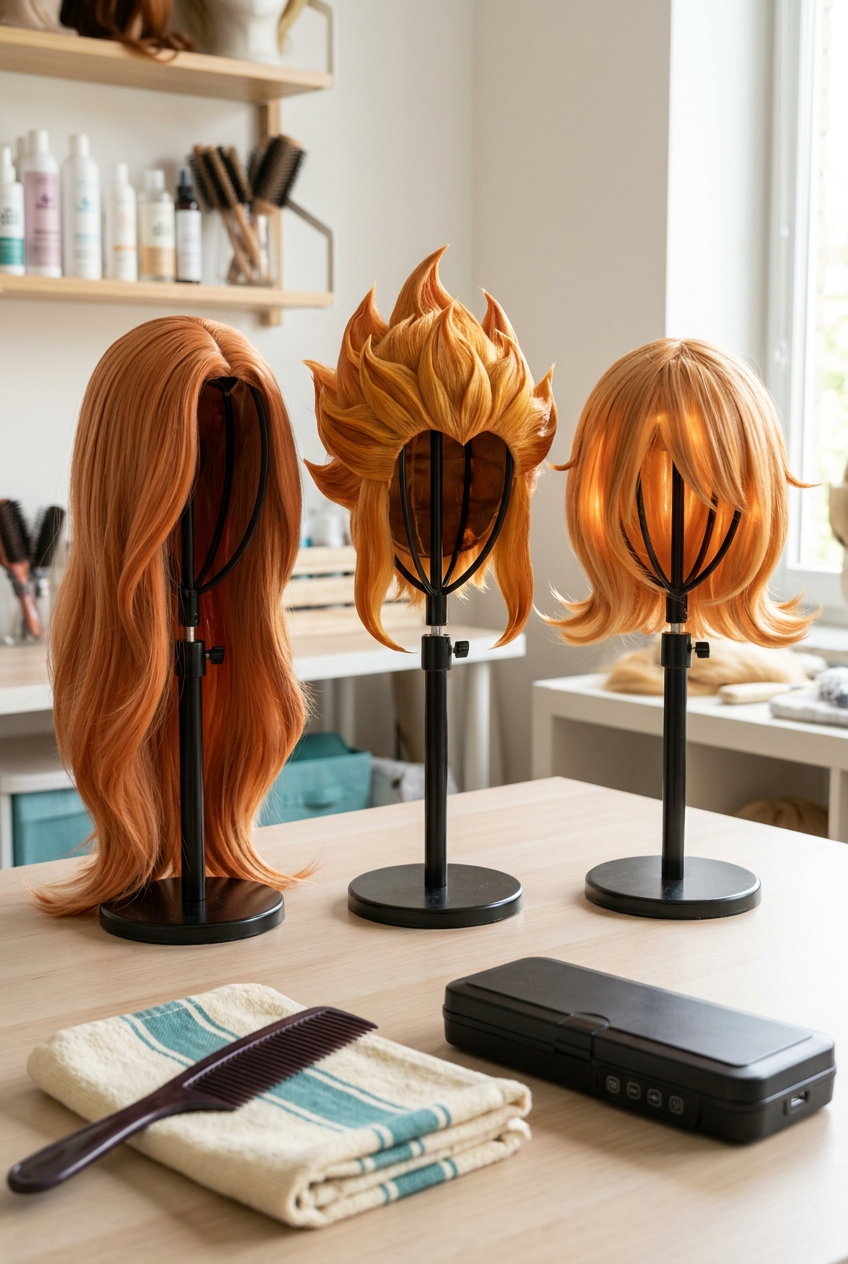
Section and Clip Excess Fiber: Place the wig on a mannequin head clamped to your workspace. Separate the front bangs section from the side face-framing locks using sectioning clips.
-
Utilize Point-Cutting (Vertical Snips): Never cut synthetic bangs horizontally straight across—this leaves harsh, choppy blunt lines. Hold your scissors vertically and make small, upward snips into the tips of the fiber (point-cutting) to soften the edge.
-
Blend with Thinning Shears: Feather the bottom 1 inch of the bangs using thinning shears. Thinning removes excess bulk, allowing the hair to drape naturally over the forehead without creating an overly thick plastic appearance.
Step 3: Heat-Curling Synthetic Fibers Safely with Rollers & Steam
Synthetic fibers do not curl like human hair—they soften under heat and lock into shape only as they cool.
-
Verify Fiber Heat Limits: Ensure your wig is made from heat-resistant synthetic fiber (such as Kanekalon). Keep heat tools below $220^\circ\text{F}$ ($104^\circ\text{C}$).
-
Wrap and Heat the Fiber Section: Take a 1-inch section of fiber, mist lightly with water, and wrap it around a low-heat curling iron barrel for 8–10 seconds.
-
Pin and Cool to Lock the Shape: Slide the warm curl off the iron barrel without unrolling it, securing the coil flat against the wig cap with a metal duckbill clip.
-
Alternative Steam Method: Roll hair sections onto plastic foam rollers and pass a handheld garment steamer over the rolled sections. Allow the fibers to cool completely for 15 minutes before unpinning to set lasting, bouncy curls.
Troubleshooting & Beginner Maintenance Pitfalls
-
Melted Plastic Fibers: If fibers singe or crinkle under your heating tools, your iron temperature is too high. Switch to a garment steamer or hot water dipping method ($180^\circ\text{F}$ / $82^\circ\text{C}$) to shape non-heat-resistant fibers safely.
-
Visible Wig Netting: Over-brushing or aggressive teasing can expose the internal cap mesh. Fill sparse gaps by sewing in extra matching hair wefts or gently crimping the root fibers underneath to create volume.
-
White Glue Residue on Lace: Applying too much spirit gum or lace tape can cause white residue to show along the hairline. Clean excess dried adhesive using a cotton swab dipped in isopropyl alcohol.
Conclusion & Next Steps
Mastering the fundamentals of wig application, point-cutting, and heat-curling gives you total creative freedom over your character transformations. By starting with dense, heat-friendly base hair and using gentle cooling techniques, you can achieve professional, camera-ready hairstyles at home. Explore our store collection for beginner-friendly cosplay wigs for sale to grab a reliable base wig for your next project!

Leave a comment
This site is protected by hCaptcha and the hCaptcha Privacy Policy and Terms of Service apply.