Introduction
Black Friday is traditionally associated with major retailers, promotional pricing, and the rush to find seasonal deals. But the shopping weekend after Thanksgiving offers another perspective for consumers who care about creative work: supporting the independent businesses and individual artists behind the products they buy.
In 2026, Small Business Saturday falls on November 28, followed by Artists Sunday on November 29. Small Business Saturday, founded by American Express in 2010 and co-sponsored by the U.S. Small Business Administration since 2011, encourages consumers to support small businesses. Artists Sunday takes a more specific approach, encouraging shoppers to purchase original work from artists and craftspeople.
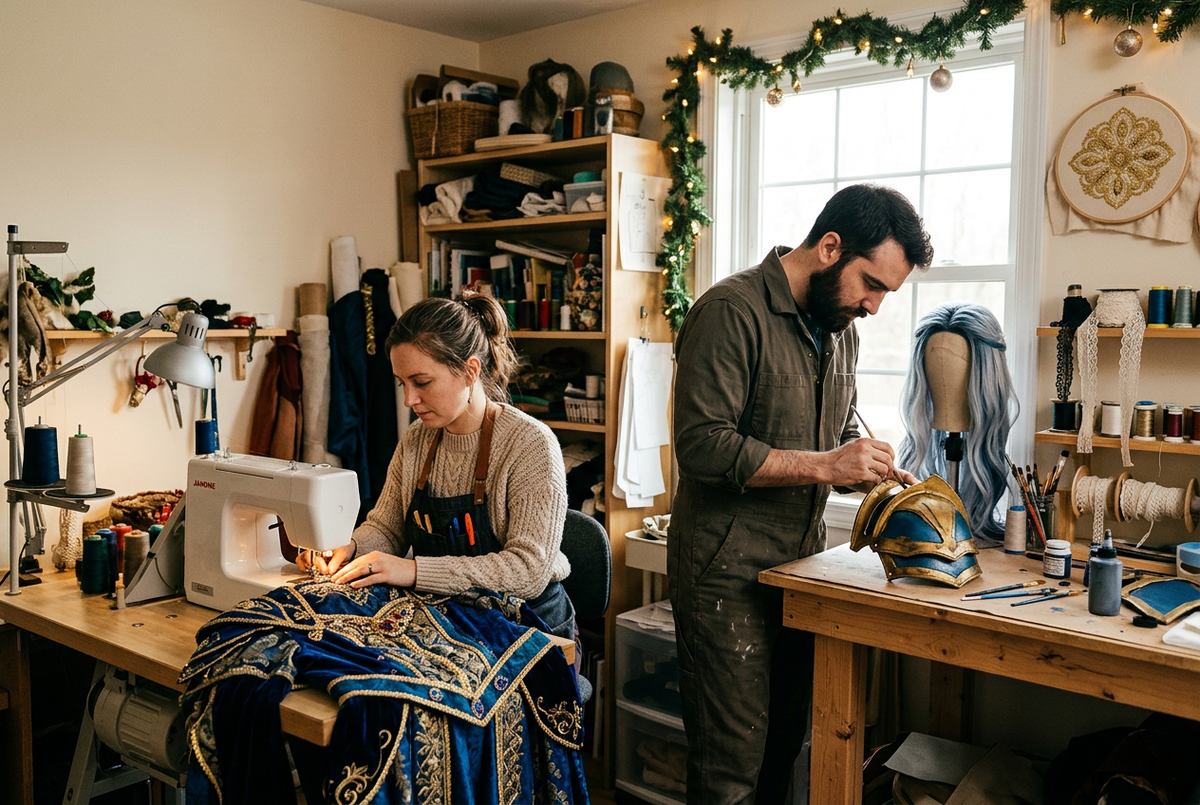
For cosplay enthusiasts, these two occasions provide an opportunity to think beyond the price of a finished costume. Independent costume creators, custom prop makers, wig stylists, and accessory designers contribute skills and creative labor that are not always visible in a product listing.
This does not mean that mass-produced costumes are inherently inferior or that every cosplayer should commission custom work. Different budgets, deadlines, and skill levels call for different purchasing choices. Instead, the important question is how consumers can recognize the value of independent creative work and make informed decisions when they have the opportunity to support it.
1. What Is the Difference Between Black Friday, Small Business Saturday, and Artists Sunday for Cosplay Shoppers?
Direct Answer: Black Friday emphasizes seasonal retail promotions, Small Business Saturday encourages purchases from small businesses, and Artists Sunday highlights original work by individual artists and craftspeople. For cosplay shoppers, each offers a different way to approach costume and prop purchases.
The dates create a clear sequence in the 2026 U.S. holiday shopping calendar:
| Shopping occasion | 2026 date | Main focus |
|---|---|---|
| Black Friday | November 27 | Seasonal retail promotions |
| Small Business Saturday | November 28 | Small and independent businesses |
| Artists Sunday | November 29 | Original work by artists and craftspeople |
| Cyber Monday | November 30 | Online shopping promotions |
| Giving Tuesday | December 1 | Charitable giving |
Small Business Saturday was established by American Express in 2010 and has been co-sponsored by the U.S. Small Business Administration since 2011. The SBA describes the event as an opportunity to recognize small businesses and encourage consumers to shop locally and support independent businesses.
The scale of the shopping occasion is also worth understanding. American Express reported an estimated $18 billion in consumer-reported spending at small businesses for Small Business Saturday 2025. This figure is based on survey responses and population projections, not verified receipts or actual payment transactions. It demonstrates the scale of reported consumer participation, but it should not be interpreted as a measurement of cosplay-related spending.
Artists Sunday adds another dimension. Its official campaign encourages consumers to purchase original, artist-created work during the holiday shopping season. The organization distinguishes artists who create original work from retailers that simply resell other people's products.
For cosplay, this distinction matters because the creative supply chain can include several different kinds of sellers:
-
Independent costume designers who develop original patterns or modify existing designs.
-
Custom prop makers who build character-inspired weapons, armor, accessories, and decorative pieces.
-
Wig stylists who cut, shape, color, and arrange wigs for specific character appearances.
-
Independent artists who create original prints, illustrations, accessories, and fan-inspired merchandise.
-
Small studios that handle custom commissions, measurements, fitting, and finishing.
Not every small cosplay shop is necessarily an individual artist, and not every handmade product qualifies as original artwork. However, the broader idea of supporting small businesses can include independent studios and specialist service providers, while Artists Sunday is particularly relevant to creators producing original work.
For shoppers, the difference is straightforward: Black Friday may be an opportunity to compare prices on ready-made products, while the following two days provide a reason to discover the people and small businesses responsible for more specialized creative work.
2. Why Does Supporting Independent Cosplay Makers Matter to Cosplay Culture?
Direct Answer: Cosplay is not simply the purchase of a costume. It involves interpretation, craftsmanship, problem-solving, and community participation. Independent makers contribute specialized skills and creative choices that help turn fictional character designs into wearable or displayable creations.
A finished cosplay outfit can look like a single product, but its construction may involve several distinct disciplines. A detailed character costume might require pattern drafting, fabric selection, sewing, embroidery, surface finishing, wig styling, prop fabrication, and repeated adjustments.
Independent creators often specialize in one or more of these areas. Their work can be particularly valuable when a character has unusual proportions, complicated armor, distinctive accessories, or details that are difficult to reproduce using standard ready-made designs.
Cosplay Is a Form of Creative Production, Not Just Consumption
Academic research provides a useful foundation for understanding this distinction.
In their 2017 article, Play at Any Cost: How Cosplayers Produce and Sustain Their Ludic Communal Consumption Experiences, published in the Journal of Consumer Research, Anastasia Seregina and Henri A. Weijo examine cosplay through the lens of communal consumption and craft. Their ethnographic research describes cosplay as a time- and resource-intensive activity involving material work, competence, collaboration, and community participation.
One important implication is that cosplay should not be understood only as a transaction between a retailer and a buyer. The experience also involves the skills and relationships that make creative participation possible.
A costume maker who helps a cosplayer solve a difficult construction problem is contributing something different from a seller shipping a standard product. A prop artist who develops a custom solution for an unusual character design is providing specialized creative labor. These contributions can influence the final result as well as the creator's experience of bringing a character to life.
Nicolle Lamerichs makes a related argument in her 2011 article, Stranger than Fiction: Fan Identity in Cosplay, published in Transformative Works and Cultures. Her research examines how cosplay transforms fictional narratives into personal, embodied performances through costume and fan identity.
Together, these studies help explain why the people who make cosplay objects matter. Costumes and props are not merely decorative purchases; they are part of how fans interpret and perform the characters they admire.
Custom Work Can Address Needs That Standard Products Do Not
Independent creators may offer services that are difficult to find in standardized retail products:
-
Custom measurements for different body proportions.
-
Character-specific alterations and detailing.
-
Props built around particular materials or display requirements.
-
Wig styling for unusual silhouettes or complex hairstyles.
-
Repairs, modifications, and finishing work on existing costumes.
For example, a cosplayer preparing a character with layered armor may need a prop maker who understands how to balance appearance, weight, and practical handling. Someone recreating an elaborate fantasy dress may need a costume designer who can interpret reference images and translate them into a wearable pattern.
These are not automatically better choices for every shopper. A ready-made costume may be perfectly suitable for a casual event, while a custom commission may be more appropriate when accuracy, fit, or a particular construction detail is central to the project.
The important distinction is that custom work involves a different production process. Its price may reflect consultation, design development, materials, labor, revisions, and finishing rather than simply the cost of the finished object.
Independent Makers Also Contribute to Creative Knowledge
Cosplay communities often exchange tutorials, construction methods, material recommendations, and practical advice. This shared knowledge helps participants develop skills and complete projects.
A 2021 ethnographic study published in the Journal of Documentation, titled “I found what I needed, which was a supportive community”: an ethnographic study of shared information practices in an online cosplay community, examined how members of an online cosplay group exchanged information about costume making.
The researchers found that organized information sharing and a positive community environment helped members make their costumes.
This research does not establish that buying from independent creators automatically strengthens every cosplay community. It does, however, show that knowledge exchange and collaborative support are meaningful parts of cosplay culture.
Supporting an independent maker can therefore involve more than purchasing an item. Consumers can also help creators gain visibility by sharing their work, leaving thoughtful reviews, recommending their services, and respecting the time required to produce specialized pieces.
3. How Can Cosplayers Support Local and Independent Artists During Small Business Saturday and Artists Sunday?
Direct Answer: Cosplayers can support independent makers by purchasing original work, commissioning custom pieces, discovering artists through online directories and convention communities, and sharing creators' work. The most effective support is informed, respectful, and realistic about budgets and production timelines.
Supporting independent creators does not require every shopper to place an expensive commission. There are several practical ways to participate, depending on budget, project needs, and the type of creator being supported.
1. Discover Independent Costume and Prop Creators Before Shopping
Start by identifying creators whose work matches your interests.
Useful places to explore include:
-
Artist Alley at anime and comic conventions.
-
Independent artist websites and online stores.
-
Creator portfolios on social media.
-
Small costume studios and specialist prop-making businesses.
-
Online communities where makers share finished projects and commission information.
Artist Alley is particularly relevant because it gives shoppers the opportunity to discover individual artists directly. However, not every Artist Alley vendor makes cosplay costumes or props. Some specialize in illustrations, prints, stickers, or original accessories.
The goal is not to assume that every independent seller offers the same services. Instead, look at the creator's portfolio, product descriptions, and commission policies before making a decision.
2. Consider Custom Commissions When a Project Requires Specialized Work
A custom commission can be useful when a ready-made product does not meet a specific requirement.
For example, you might commission:
-
A character-inspired prop with unusual dimensions.
-
A custom-fitted costume component.
-
A wig styled for a specific character silhouette.
-
An armor piece made to match a particular reference.
-
A handmade accessory that is not readily available through standard retailers.
Before placing an order, ask the maker about the following:
| What to check | Why it matters |
|---|---|
| Portfolio | Confirms the creator has experience with similar work |
| Materials | Helps establish durability, appearance, and care requirements |
| Measurements | Reduces the risk of fit problems |
| Production timeline | Helps determine whether the item can arrive before an event |
| Revision policy | Clarifies what changes are included |
| Payment terms | Establishes deposit, balance, and refund conditions |
| Shipping arrangements | Helps account for packaging, delivery, and possible delays |
A commission is a collaborative process, not simply an instruction to reproduce an image. Clear references, realistic expectations, and timely communication help both the buyer and the creator.
3. Support Artists Even When You Are Not Ready to Buy
Not every form of support requires a purchase.
If a creator's work is outside your current budget, you can still:
-
Share their portfolio with other cosplay enthusiasts.
-
Recommend their services to someone planning a commission.
-
Leave a detailed and honest review after a purchase.
-
Follow their official channels to keep up with new work.
-
Credit the creator when sharing photographs of commissioned pieces.
-
Attend their convention booth or online shop launch.
These actions do not guarantee additional sales, but they can help make independent work easier to discover.
For creators who rely on commissions and individual orders, visibility can be particularly useful. A recommendation from someone who has actually used a service may also give prospective customers more practical information than a generic promotional post.
4. Compare Custom Cosplay and Ready-Made Products Fairly
The discussion around independent makers should not turn into a simplistic argument that custom products are always superior.
Ready-made products can be more affordable, easier to purchase, and suitable for shoppers who need a costume quickly. They can also make cosplay more accessible to people who do not have the time, tools, or skills to create every component themselves.
Custom work offers a different set of possibilities, especially when the project requires specific measurements, unusual construction, or a high level of detail.
| Consideration | Ready-made cosplay | Custom cosplay |
|---|---|---|
| Availability | Often ready to order | Usually requires production time |
| Price | Often more standardized | Depends on labor, materials, and complexity |
| Fit | Based on available size options | May allow individual measurements |
| Design | Limited to the seller's available designs | Can accommodate specific project requirements |
| Communication | Usually focused on ordering and delivery | Often includes consultation and revisions |
| Best suited for | Convenience and defined budgets | Specialized designs and personalized requirements |
Neither option is universally better. The right choice depends on what the cosplayer needs.
5. Remember That Independent Creators Need Realistic Expectations
One of the most important ways to support independent makers is to respect the production process.
A handmade prop may require several stages of design, fabrication, sanding, painting, and finishing. A custom costume may involve pattern development, fitting, and multiple construction sessions. A complex wig can require hours of cutting, styling, and adjustment.
This is why commission deadlines should be discussed before payment. A creator's ability to accept an order depends on their current workload, material availability, and production capacity.
Shoppers should also avoid assuming that a handmade item should cost the same as a mass-produced product. A small creator may not have the purchasing volume, production equipment, or supply-chain advantages available to a large manufacturer.
At the same time, independent status alone does not guarantee quality. Buyers should still review portfolios, product specifications, policies, and customer feedback. Supporting artists should go hand in hand with informed purchasing.
Conclusion: Make the Holiday Shopping Weekend More Creative
Small Business Saturday and Artists Sunday offer two useful opportunities to look beyond the usual holiday shopping routine. For cosplay enthusiasts, they provide a reason to discover independent costume creators, custom prop makers, wig stylists, and artists whose work contributes to the creative side of fandom.
The academic literature on cosplay helps explain why these makers deserve attention. Research has examined cosplay as craft consumption, collaborative activity, and a form of personal and cultural expression. These perspectives show that the finished costume is only one part of a much larger creative process.
Supporting independent cosplay makers does not mean abandoning ready-made products or treating every custom commission as a necessity. It means recognizing that different purchasing choices support different forms of production.
On November 28 and 29, 2026, cosplayers can use the holiday shopping weekend to discover small creative businesses, commission work when it makes sense, and give independent artists greater visibility.
A costume may bring a character to life, but behind many memorable creations are the people who design, build, style, and finish the details.


Leave a comment
This site is protected by hCaptcha and the hCaptcha Privacy Policy and Terms of Service apply.