Executive Summary & TL;DR
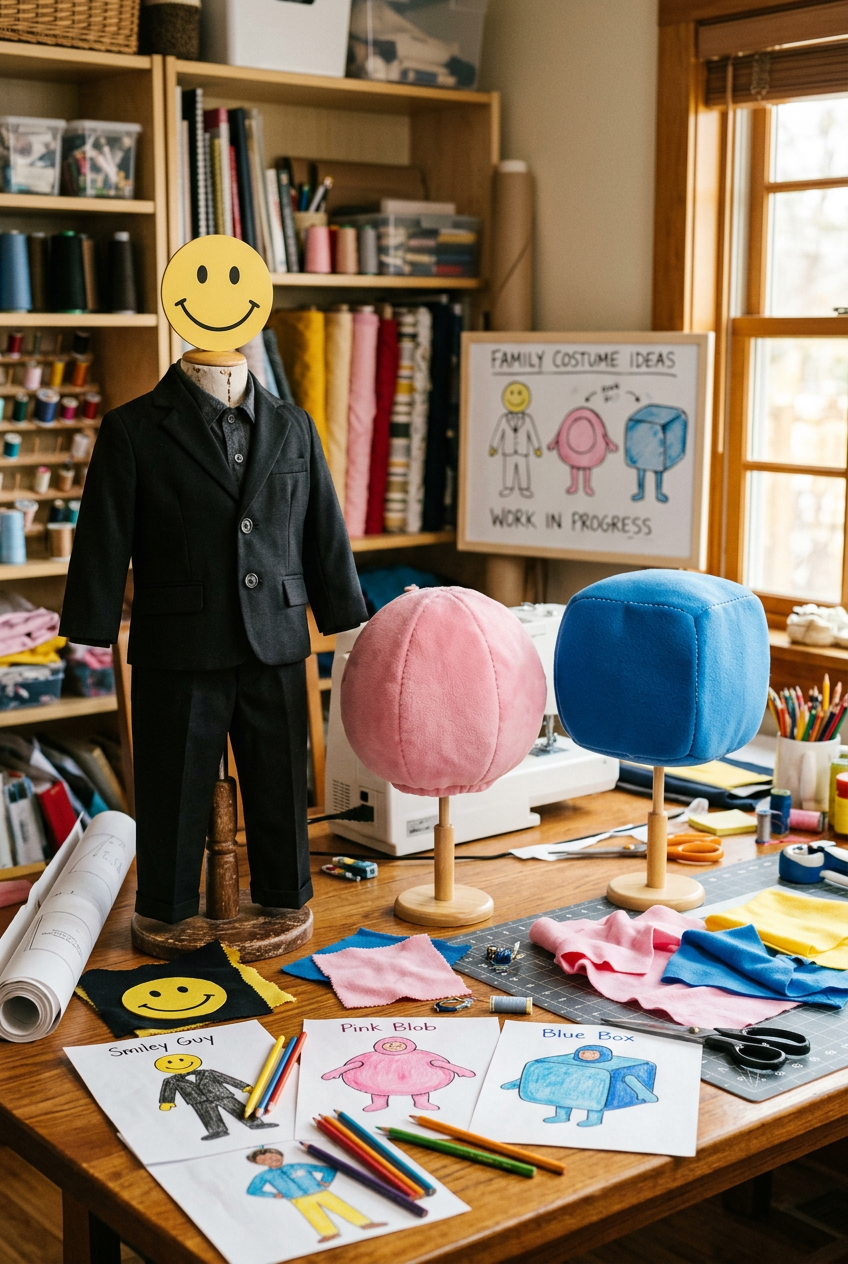
Direct Answer: When children fall in love with niche, internet-born characters like NeeDoh or Minecraft Verity that lack commercial retail options, dedicated parents step in as makers to handcraft custom DIY costumes.
Driven by viral TikTok trends and digital media sharing, family crafting has shifted from traditional mainstream superheroes to hyper-specific internet memes and indie game entities. This phenomenon explains why uncommercialized digital characters frequently dominate modern holiday trend charts.
Deep Dive: The Logic Behind Parent-Led Digital Costuming
Direct Answer: The modern parent-child DIY costume chain is driven by children's deep immersion in digital media platforms like TikTok, Roblox, and YouTube Shorts, coupled with parents' desire to validate their kids' creative imaginations through handmade craftsmanship.
Sociological and cultural studies frameworks emphasize that family costuming functions as an act of shared narrative co-creation (Jenkins, Convergence Culture, NYU Press; Belk, Possessions and the Extended Self, Journal of Consumer Research). When children consume fast-moving digital content, their attachment to internet-born characters—such as the viral NeeDoh squishy toy or indie ARG entities like Verity—creates an immediate demand that commercial mass-market retailers cannot satisfy.
As observed across creator networks (where parents comment "My kid wanted to be X, so I had to make it"), parents leverage platforms like TikTok to share tutorials, source improvised materials like cardboard and acrylic paint, and build collaborative family sets. This participatory maker culture turns passive digital consumption into an active, bonding hands-on project.
Key Elements and Typical Family Cosplay Scenarios
Direct Answer: Successful parent-child DIY builds rely on lightweight structural engineering, safe non-toxic materials, and coordinated group themes that allow both parents and children to participate in the narrative.
-
Translating Digital Art to Physical Craft: Parents frequently utilize accessible workshop materials—such as corrugated cardboard, high-density craft foam, and non-toxic water-based acrylic paints—to replicate minimalist digital characters (e.g., Minecraft Verity or custom color variants).
-
Coordinated Family & Group Builds: Rather than disjointed individual outfits, parent-child pairs often expand into group dynamics (such as coordinating character variants or multi-member team builds like KPop Demon Hunters or colored NeeDoh cubes), amplifying social media engagement and shared play value.
-
The Emulation Chain: Online visibility fuels physical reproduction; when one parent posts a successful homemade build, it sparks a cascading chain of imitation and adaptation across the community.
Common Pitfalls and Precautions for Parent-Child DIY Projects
-
Overcomplicating Structural Weight: Parents often design large foam or cardboard props that are too heavy for children to wear comfortably for long periods. Always prioritize lightweight materials like hollow foam or thin corrugated panels.
-
Ignoring Visibility and Breathability: Enclosed masks or bulky box costumes can severely restrict a child's peripheral vision and airflow. Always add breathable mesh viewports and ventilation holes.
-
Failing to Test Mobility: A costume that looks stunning in a stationary photo shoot may cause tripping hazards during active trick-or-treating. Always complete a full walking and sitting test before the main event.
Conclusion & Extended Reading
Parent-led DIY builds for internet-born characters bridge the gap between fast-paced digital media consumption and meaningful family craftsmanship. By transforming fleeting internet trends into tactile, handmade garments, parents not only fulfill their children's imaginative wishes but also foster a vibrant, participatory maker culture. Explore our catalog for specialized kids cosplay costumes and DIY costume supplies to support your next family crafting project!


Leave a comment
This site is protected by hCaptcha and the hCaptcha Privacy Policy and Terms of Service apply.