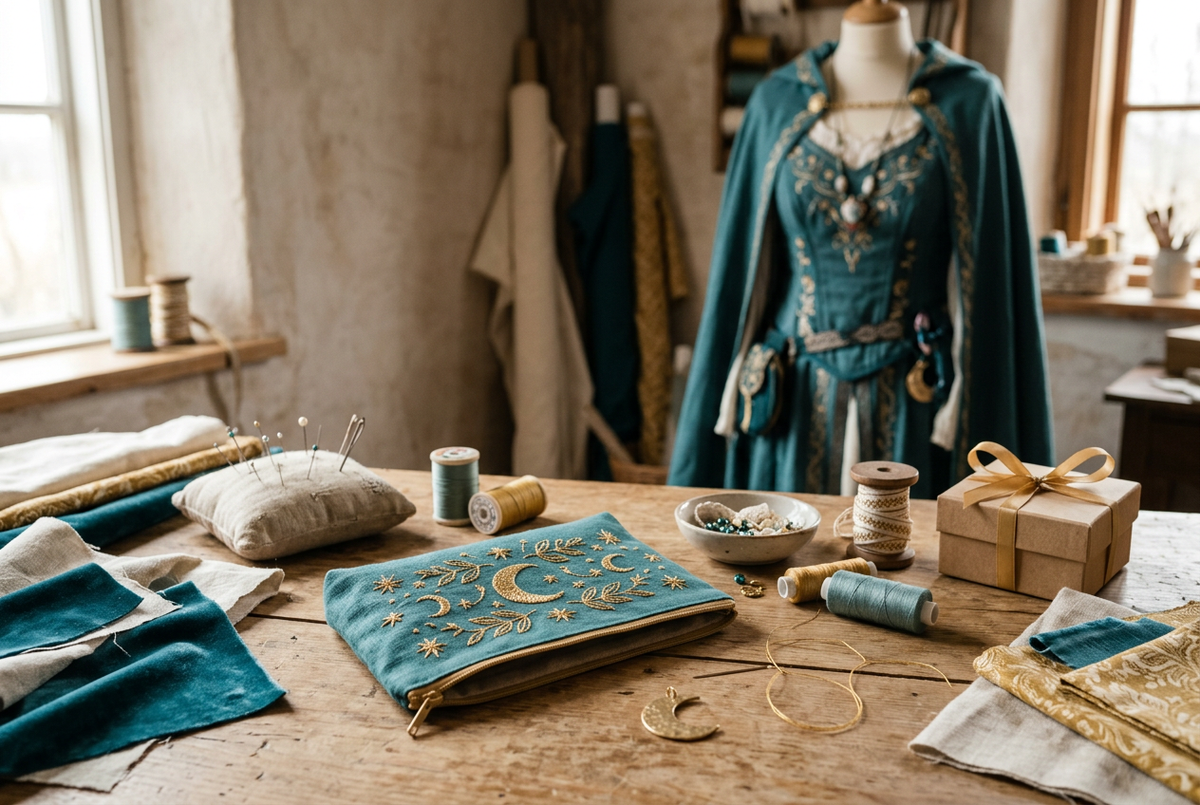
Introduction / TL;DR
Handmade gifts have a special place in cosplay culture because they combine personal creativity, fandom, and the effort of making something meaningful. Whether it is a small character-inspired accessory, a handmade prop, or a customized costume detail, a DIY creation can carry more personal meaning than an ordinary store-bought item.
A 2025 holiday shopping analysis from Northwestern University's Medill Spiegel Research Center found that 13.5% of surveyed consumers planned to make more gifts by hand. Although this was not a cosplay-specific survey, it provides useful context for understanding why handmade gifts deserve attention during budget-conscious shopping seasons.
The key takeaway: Handmade cosplay gifts are not simply a cheaper alternative to commercial products. They can be personal expressions of fandom, creative skills, and community connection.
Why Handmade Gifts and Craft Culture Matter in Cosplay
1. Handmade gifts offer something mass-produced products cannot always provide
One of the most important differences between handmade and mass-produced gifts is perceived uniqueness.
A handmade gift can reflect the recipient's favorite character, preferred color palette, personal interests, or a shared memory. For example, a cosplayer might create a miniature version of a friend's favorite weapon, a personalized decorative badge, or a small accessory inspired by a particular game or anime.
Research supports the social value of this distinction. Fan, Lai, and Keh's 2024 study, Handmade vs. Machine-Made: The Effects of Handmade Gifts on Social Relationships, published in Marketing Letters, examined how handmade gifts influence social relationships. Across three studies, the researchers found that handmade gifts could strengthen relationship evaluations, with perceived uniqueness helping explain the effect.
This does not mean every handmade gift will automatically be more meaningful than a purchased one. The research suggests that perceived uniqueness matters, and the recipient's circumstances can influence how the gift is evaluated.
In cosplay, this creates an interesting opportunity. A small handmade object can communicate that the giver understands the recipient's fandom and has invested personal effort in the gift.
2. DIY cosplay is part of the culture, not just a way to save money
Cosplay is often discussed through finished costumes, convention photographs, and character accuracy. However, the process of making costumes and accessories is also an important part of the practice.
In their 2017 Journal of Consumer Research article, Play at Any Cost: How Cosplayers Produce and Sustain Their Ludic Communal Consumption Experiences, Seregina and Weijo examined cosplay through ethnographic research. They described cosplay as a time- and resource-intensive form of craft consumption and explored how participants manage the material, emotional, temporal, and skill-related costs of participation.
Their research is particularly relevant because it shows that cosplay is not simply about purchasing an outfit and wearing it. Participants actively produce and sustain their experiences through creative work, collaboration, and practical adjustments.
Lamerichs's 2011 article, Stranger than Fiction: Fan Identity in Cosplay, also examines how cosplayers create costumes inspired by fictional characters and connect those creative practices with personal identity and fan communities.
Together, these studies help explain why handmade gifts fit naturally into cosplay culture. Making something can be a way to interpret a character, express fandom, and participate in a shared creative practice.
3. Budget-conscious crafting can make participation more accessible
The financial side of cosplay should not be ignored. Materials, wigs, footwear, accessories, and complete costumes can add up quickly.
A handmade accessory or a carefully modified existing item may offer a more manageable way to participate without purchasing an entirely new costume. Reusing suitable materials can also reduce unnecessary spending.
However, it is important not to assume that DIY is always cheaper. Tools, specialty materials, failed attempts, and the time required to learn a technique can make a handmade project expensive.
The better approach is to treat budget-friendly cosplay crafting as a process of planning:
-
Decide which parts of a project genuinely need to be purchased.
-
Check whether suitable materials are already available.
-
Reuse or modify items when doing so will not compromise safety or appearance.
-
Choose a project that matches your current skill level.
-
Set a spending limit before buying additional tools or supplies.
The goal is not to make everything from scratch. It is to use creative decisions to make a project more personal and financially manageable.
Key Applications: How Handmade Gifts Fit into Cosplay Culture
1. Handmade cosplay props and character-inspired accessories
Props are among the most recognizable ways to express character fandom.
A handmade prop does not have to be a full-size replica. Smaller projects can make thoughtful gifts while allowing creators to practice useful techniques.
Examples include:
-
Miniature character-inspired weapons or decorative replicas.
-
Foam accessories and lightweight costume details.
-
Handmade badges, charms, and themed ornaments.
-
Small display pieces inspired by a favorite game or anime.
-
Customized accessories using colors or symbols associated with a character.
For holiday gifts, smaller projects are often more practical than complicated full-size props. They are easier to package, transport, and personalize.
Creators should also consider how the item will be used. A decorative miniature has different requirements from a convention prop that will be carried throughout an event.
2. Personalized gifts for cosplay friends
Cosplay communities often bring together people who share interests in particular characters, games, anime, and creative techniques.
That makes personalized gifts especially suitable for this environment.
For example, a handmade sewing kit pouch, a customized accessory organizer, or a small character-themed decoration can be useful without requiring the recipient to wear or display a complete costume.
A gift can also reflect a shared experience. Someone who attended a convention with a friend might make a small keepsake inspired by the characters they portrayed together.
This kind of gift combines practical value with personal meaning. It does not need to be technically complicated to feel thoughtful.
3. Holiday-season handmade gifts and DIY projects
The holiday season provides a natural opportunity to make small cosplay-related gifts.
The Medill Spiegel Research Center's analysis of the October 2025 Prosper Insights & Analytics survey offers relevant consumer context. The survey included 8,247 respondents. It reported that 13.5% planned to make more gifts for family and friends, while 18.6% planned to reuse decorations from the previous year.
These findings suggest that some consumers were considering more hands-on and reuse-oriented approaches to holiday spending.
However, the figures should be interpreted carefully. They measure general holiday shopping intentions, not actual purchases, completed handmade projects, or cosplay-specific behavior. They also describe 2025 rather than establishing a measured trend for 2026.
For cosplay enthusiasts, the practical lesson is not that everyone should start making gifts. Instead, the holiday season can be a useful time to turn existing creative skills into thoughtful, manageable projects.
4. Choosing DIY cosplay materials and tools
A successful handmade project begins with choosing materials that match its intended purpose.
Before buying supplies, consider the following:
| Project | Materials to consider | Important consideration |
|---|---|---|
| Lightweight props | EVA foam, suitable adhesives, paint | Shape, durability, and safe handling |
| Fabric accessories | Fabric, thread, needles, fasteners | Comfort and material compatibility |
| Decorative gifts | Cardstock, paint, clay, decorative elements | Finish and storage |
| Costume details | Fabric, trims, foam, closures | Weight and attachment method |
| Small display pieces | Suitable modeling materials and paint | Stability and durability |
The table is a general starting point, not a universal materials prescription. Different projects require different construction methods.
If you are shopping for DIY cosplay props and handmade accessories, compare material compatibility, package size, tool requirements, and the total cost of the finished project. Buying the cheapest material is not always the most economical decision if it cannot produce the result you need.
Common Mistakes and Things to Consider
1. Assuming handmade always means inexpensive
DIY projects can reduce spending when creators reuse materials or already own the necessary tools. However, specialty supplies and repeated attempts can increase costs.
Compare the complete project cost rather than looking only at the price of individual materials.
2. Confusing handmade gifts with professional replicas
A handmade gift does not need to reproduce every character detail perfectly.
A small decorative item can be successful because it communicates a personal connection, even if it is not suitable for competition or detailed cosplay photography.
Set expectations according to the project's purpose.
3. Ignoring safety when making props
Cosplay props should be designed with their intended environment in mind.
Avoid sharp edges, unsafe construction methods, and materials that may create unnecessary risks. Consider the rules of the convention or event before bringing a prop into the venue.
When using adhesives, paints, coatings, or cutting tools, follow the manufacturer's instructions and appropriate ventilation and protective-equipment guidance.
4. Treating DIY as a replacement for every purchased product
Not every cosplayer has the time, equipment, or skills to make every costume component.
Buying a finished costume, wig, or accessory is still a valid way to participate in cosplay. Handmade and commercially produced items can also be combined.
The most useful approach is to choose based on project requirements, budget, available time, and personal preference rather than treating one method as superior.
5. Forgetting the recipient's preferences
A handmade gift requires thought about the person receiving it.
A complicated prop may be impressive but impractical for someone with limited storage space. A decorative accessory may be less useful to someone who prefers functional costume equipment.
Consider what the recipient enjoys, what they already own, and whether the gift fits their style of cosplay.
Conclusion: Handmade Creativity Is Part of What Makes Cosplay Personal
Handmade gifts connect naturally with cosplay because both involve creativity, personal expression, and engagement with fandom.
The 2025 Medill holiday shopping analysis provides evidence that some consumers planned to make more gifts by hand during a period of budget-conscious shopping. Academic research adds a deeper explanation: handmade gifts can communicate uniqueness, while cosplay research shows that making, adapting, and collaborating are meaningful parts of the cosplay experience.
There is no need to turn every project into an elaborate costume or expensive prop. A small handmade accessory, a personalized keepsake, or a carefully crafted decorative item can be enough to celebrate a shared interest.
Ultimately, the value of handmade cosplay gifts is not measured only by the cost of materials or the complexity of construction. It also comes from the time, thought, and creative identity invested in making something for another person.


Leave a comment
This site is protected by hCaptcha and the hCaptcha Privacy Policy and Terms of Service apply.