Table of Contents
-
Dimension 1 Comparison: Range of Motion & Instrumental Ergonomics
-
Dimension 2 Comparison: Stage Lighting Dynamics & Material Durability
-
Dimension 3 Comparison: Acoustic Clearance & Thermal Regulation
-
When Should You Choose Performance-Friendly Musician Cosplay Costumes?
Quick Verdict: Who Suits Which Scenario?
-
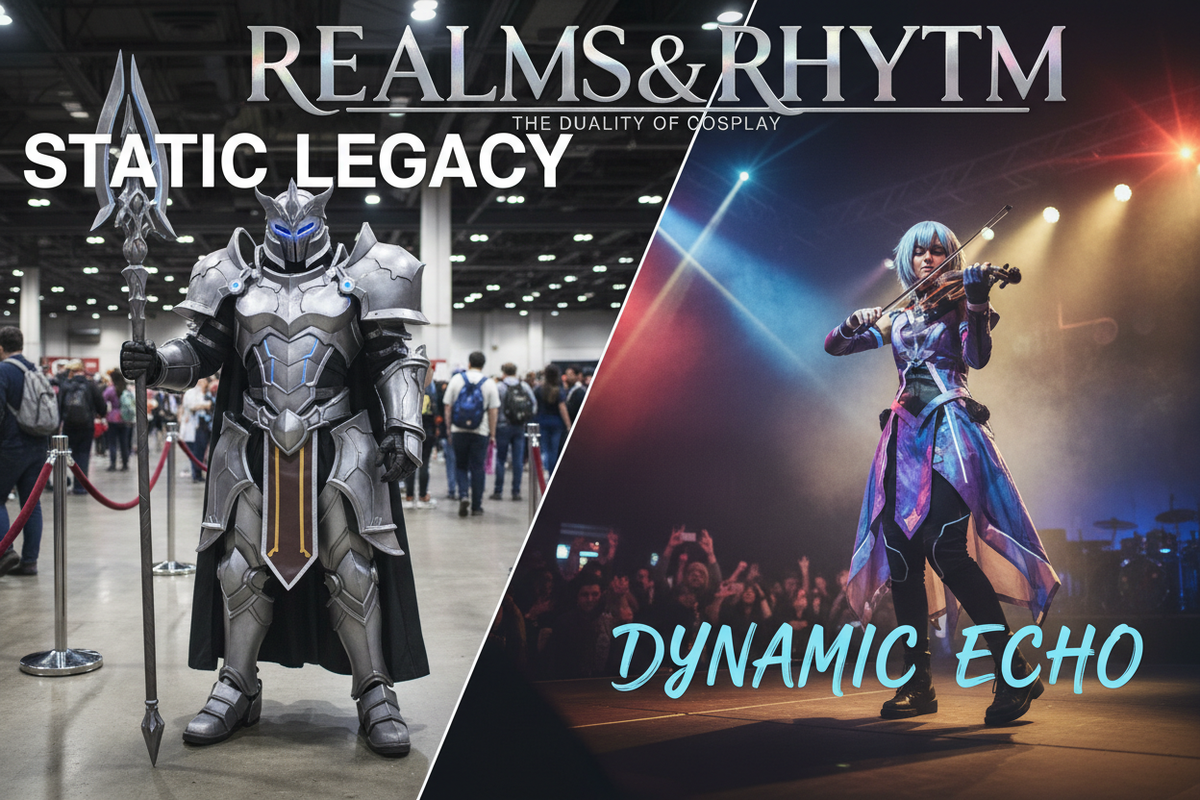
Choose Standard Display Cosplay Costumes if your goal is static floor photography, hall walk-arounds, studio photoshoots, or costume contests where maximum screen-accurate rigidity outweighs physical mobility.
-
Choose Performance-Friendly Musician Costumes if you are an instrumentalist, vocalist, or live stage artist—such as violinist Ayasa or stage covers artists—integrating musician cosplay to build a visual brand without restricting arm extension, instrument contact, or stage movement.
Core Parameters & Performance Features Comparison Table
| Feature / Metric | Standard Display Cosplay Costumes (Product A) | Performance-Friendly Musician Costumes (Product B) |
| Sleeve & Shoulder Construction | Rigid synthetic seams, static tailored shoulders | 4-way stretch gussets, articulated shoulder scye |
| Instrument Contact Clearance | Exposed metallic buttons, sharp resin brooches | Flush interior fasteners, smooth anti-scratch chest panels |
| Stage Heat Dissipation | Unlined dense polyester or heavy satin | Moisture-wicking micro-mesh, concealed airflow vents |
| Prop & Sleeve Weight | Unweighted decorative drapes, trailing cuffs | Weighted hemlines, secure wrist cuffs to clear instrument strings |
| Acoustic / Mic Interference | Loose bells, noisy chainmail, rustling vinyl | Silent fabric blends, noise-dampening interior linings |
| Recommended Continuous Stage Use | 15–30 Minutes before movement fatigue | 1.5–3 Hours of continuous active live instrumental performance |
Dimension 1 Comparison: Range of Motion & Instrumental Ergonomics
Incorporating costume aesthetics into a live music set transforms a concert into a rich narrative experience. However, a successful cosplay performance relies on tailored mobility that never hampers musical execution.
                    [ INSTRUMENTAL ERGONOMICS ARCHITECTURE ]
                                       │
     ┌─────────────────────────────────┴─────────────────────────────────┐
     ▼                                                                   ▼
Standard Display Costumes                               Performance-Friendly Outfits
- Stiff shoulder seams restrict arm elevation           - Articulated shoulder gussets allow full bowing/strumming
- Trailing sleeves snag on strings & keys               - Elasticized cuffs keep wrists completely clear
- Rigid collar blocks chin-rest placement               - Low-profile collars accommodate violins/guitars
-
Standard Display Costumes (Product A): Replicating anime artwork down to the exact seam often means using stiff, non-stretch woven fabrics. For a violinist, guitarist, or drummer, rigid armholes prevent full arm extension, causing shoulder fatigue and impeding fast instrumental passages.
-
Performance-Friendly Musician Costumes (Product B): Engineered stage outfits swap rigid upper-body panels for stretch-spandex gussets hidden under armpits and shoulder capes. Wrists feature elasticized cuffs or tapered sleeves that prevent fabric from catching on guitar pegs, violin bows, or piano keys.
Dimension 2 Comparison: Stage Lighting Dynamics & Material Durability
Live stage performances subject garments to harsh lighting glare, rapid physical movement, and heavy sweat. Choosing proper stage cosplay fabrics protects both the artist's comfort and the visual quality of the show.
-
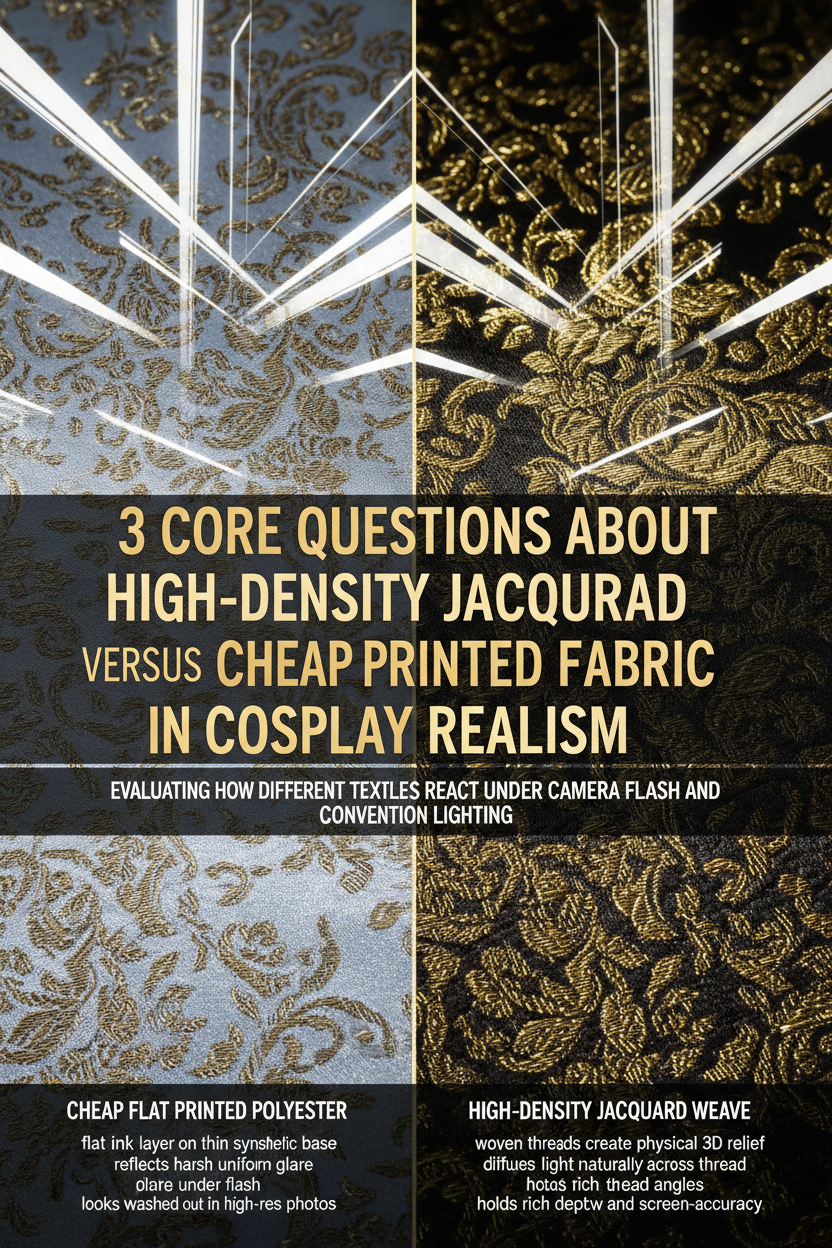
Standard Display Costumes (Product A): Mass-market printed polyesters reflect a blinding glare under intense stage spotlights, washing out character details and causing the outfit to look flat on live video feeds. Unreinforced seams can pop when subjected to aggressive bowing or drumming motions.
-
Performance-Friendly Musician Costumes (Product B): Stage-ready garments utilize high-density jacquard, matte brocades, and reinforced double-stitched stress seams. These materials absorb and diffuse spotlight beams naturally while enduring aggressive physical movements throughout a tour setlist.
Dimension 3 Comparison: Acoustic Clearance & Thermal Regulation
Music-driven cosplay requires strict attention to sound preservation and physical endurance.
-
Standard Display Costumes (Product A): Loose metal chains, plastic charms, and stiff vinyl coats generate unwanted rustling noise that sensitive wireless clip-on microphones pick up. Unventilated synthetic linings trap core body heat, leading to premature dehydration and sweaty hands during intense solos.
-
Performance-Friendly Musician Costumes (Product B): Performance builds feature noise-dampening soft-touch trims, flush-mounted fabric snaps, and scratch-free chest panels that protect expensive wooden instruments (like violins and acoustic guitars) from belt-buckle scratches. Concealed mesh ventilation panels keep core body temperatures stable under hot stage lights.
When Should You Choose Standard Display Cosplay Costumes?
Opting for a classic display costume makes sense in non-musical, visual-first environments:
-
Short-Duration Convention Floor Walk-Arounds: Where static visual accuracy takes precedence over continuous arm mobility.
-
Controlled Studio Photoshoots: Where poses are held briefly and rest breaks are frequent.
-
Static Masquerade Display Judging: Where judges evaluate intricate historical drape and complex unyielding armor structures.
When Should You Choose Performance-Friendly Musician Cosplay Costumes?
Investing in performance-friendly cosplay costumes is essential for live performance artists:
-
Instrumentalists & Stage Musicians: Violinists, guitarists, keytarists, and drummers who require complete upper-body mobility and anti-scratch chest panels.
-
Vocalists & Active Stage Performers: Artists needing moisture-wicking linings, hidden airflow vents, and scratch-free mic clearance during dynamic choreography.
-
Touring Content Creators: Musicians filming multi-take live-cover videos where visual depth and garment durability under lighting are paramount.
Summary & Call to Action (CTA)
Combining live music with character cosplay creates a captivating visual story, but your outfit should elevate your sound—not restrict your technique. By choosing performance-friendly costumes crafted with articulated stretch panels, instrument-safe trim, and breathable linings, you can deliver an unforgettable, flawless performance.
Ready to take your stage presence to the next level? Explore our collection of performance-friendly cosplay costumes designed specifically for active mobility, instrument clearance, and stage durability.
Explore the Performance Cosplay Trilogy & Related Guides:
-
Pro Wrestlers Embracing Cosplay Culture: How combat athletes merge high-impact acrobatics with anime character gear.
-
Transformation Cosplay Performance Guide: Mastering quick-change mechanics and theatrical stage reveals.


Leave a comment
This site is protected by hCaptcha and the hCaptcha Privacy Policy and Terms of Service apply.