Table of Contents
- Chapter 1: The Basics — What Anime Expo 2026's Scale Actually Looks Like
- Chapter 2: Core Strategy — A Practical Framework for Navigating a Mega-Convention
- Chapter 3: Advanced Techniques — First-Timer vs. Veteran Approaches
- Chapter 4: Tools & Resources
- FAQ
- Summary & Related Reading
Chapter 1: The Basics — What Anime Expo 2026's Scale Actually Looks Like
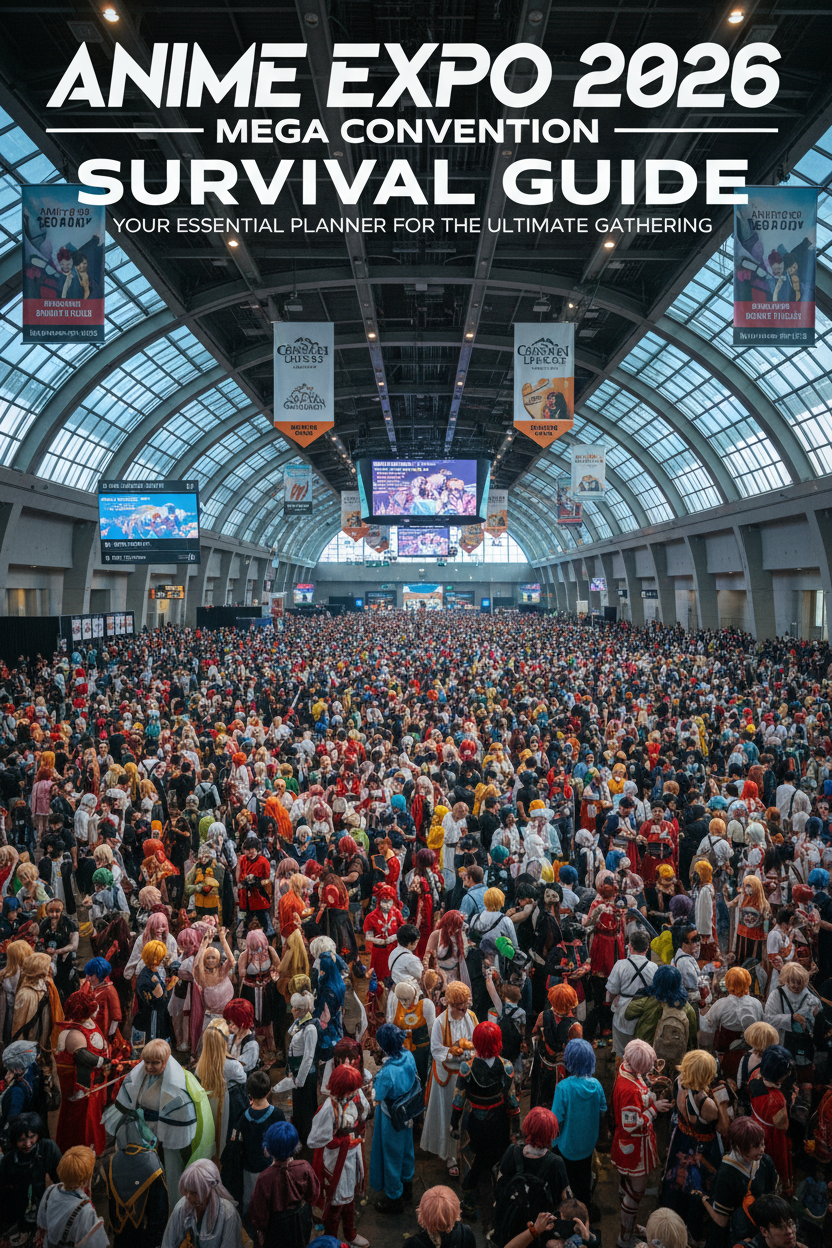
Anime Expo 2026 put a hard number on something the community has felt building for years: conventions have stopped being medium-sized gatherings and become genuine mass events. (cite index="17-1">The four-day weekend drew almost half a million attendees, backed by 1,400 hours of official programming</cite>, alongside guest appearances from voice actors tied to some of the biggest current franchises — (cite index="17-1">including talent from Dan Da Dan, Demon Slayer, Jujutsu Kaisen, and Genshin Impact</cite>. This isn't a vague "the con felt busier this year" impression — it's a specific, citable scale that changes what actually needs to be planned for.
Understanding what "mega-convention" means in concrete terms matters before you plan around it. At this scale, Anime Expo cosplay content isn't competing with a few hundred other attendees for photo space, panel seating, or line position — it's competing with hundreds of thousands. That single fact reshapes nearly every practical decision covered later in this guide, from what to pack to how you schedule your day.
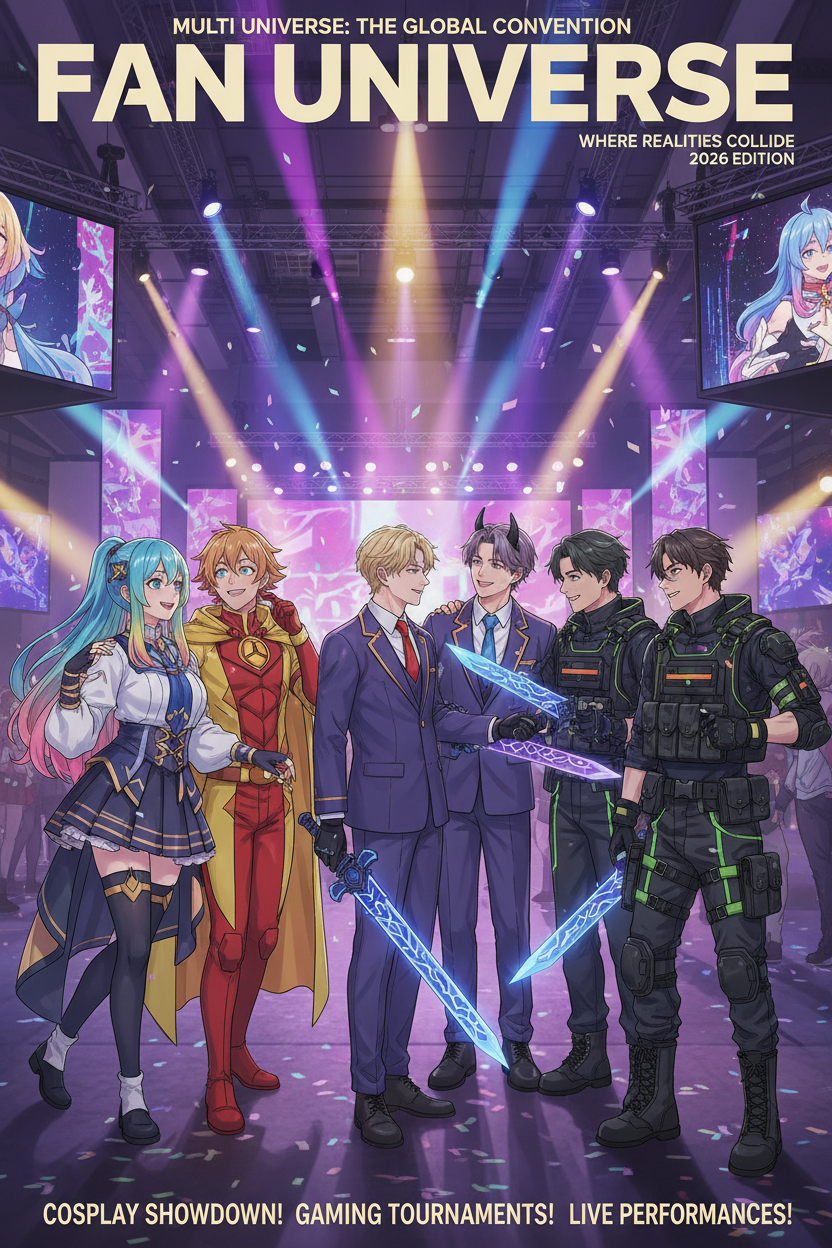
This scale shift also connects to a broader pattern discussed elsewhere in current convention coverage: events are increasingly blending multiple fandoms, genres, and content types into a single gathering rather than serving one narrow community. A half-million-person event isn't reaching that size by serving a single niche — it's reaching it by becoming a genuinely broad cultural gathering that happens to be anchored in anime and gaming fandom, with Anime Expo attendance growth reflecting that expanding draw rather than just deeper loyalty from an existing fanbase.
The practical takeaway for Chapter 1: if you're planning around large anime conventions 2026, treat "mega-convention" as its own distinct category of event requiring its own planning approach — not simply a bigger version of a mid-sized regional con where you can get away with showing up and improvising.
Chapter 2: Core Strategy — A Practical Framework for Navigating a Mega-Convention
Scale changes the cosplay experience in specific, predictable ways, and each one has a corresponding strategy worth building into your plan before you arrive.
Queue Time Becomes a Primary Planning Variable
At half-million-attendee scale, lines for popular panels, photo ops, and even basic services like registration or food can extend well beyond what a smaller con trains you to expect. Build real queue buffer into your schedule rather than assuming you can walk up to something and get in within a few minutes — for anything genuinely high-priority to you, plan to arrive earlier than feels necessary, since "earlier than necessary" at this scale often turns out to be exactly on time.
Photo Space Requires Active Scouting, Not Assumption
With this many attendees also in costume, the good, consistent, well-lit photo spots that used to be findable on the fly get claimed fast and stay busy all day. Scouting locations in advance — checking convention maps, prior-year photos from other attendees, or simply doing a walk-through early in the day before crowds build — puts you ahead of relying on stumbling into open space later.
Energy Management Matters More Than at a Smaller Event
A half-million-person venue means more walking distance between areas, more time spent navigating crowds, and generally higher physical demand across a full day than a smaller, more compact convention layout. Building in deliberate rest points — a scheduled break, a seated meal rather than eating on the move — is worth planning proactively rather than waiting until you're already exhausted to acknowledge you need one.
First-Timers Need a Genuinely Different Onboarding Approach
At this scale, a first-time attendee's normal instinct to "figure it out as you go" breaks down fast — the sheer size of the venue and crowd makes improvisation far less forgiving than it would be at a smaller event. A basic pre-arrival plan (which panels or photo goals actually matter most to you, roughly where key areas are located, a meeting point if you're attending with a group and get separated) does far more heavy lifting at mega-convention scale than it would need to at a smaller show.
Chapter 3: Advanced Techniques — First-Timer vs. Veteran Approaches
The First-Timer Approach: Structure Over Spontaneity
For anyone attending a mega convention cosplay event of this scale for the first time, the biggest adjustment is accepting that spontaneity has real costs here that it wouldn't at a smaller con. A first-timer's realistic strategy: pick two or three genuinely must-do priorities for the entire event (not per day — for the whole event) and build your schedule around protecting those, treating everything else as opportunistic rather than planned. Trying to do everything at mega-convention scale is a reliable way to end up exhausted and having done very little of what actually mattered to you.
It's also worth arriving with lower expectations around casual, unplanned social interaction than a smaller con would offer — at this scale, running into specific friends or planned meetups without a concrete arranged time and location is genuinely difficult, simply due to sheer crowd density.
The Veteran Approach: Micro-Optimization and Timing Windows
Experienced mega-convention attendees tend to operate on a different strategy entirely: rather than trying to structure around peak demand, they identify and exploit the specific timing windows when crowd density temporarily drops — early morning before doors technically open to the general flow, or specific transition periods between major scheduled events when a large portion of attendees are still relocating rather than occupying any single space. This kind of micro-timing knowledge is exactly what experience at this specific scale of event teaches you, and it's very hard to replicate from general convention advice alone, since it depends on that specific venue's actual traffic patterns.
Veterans also tend to treat gear and preparation more seriously at this scale than they might for a smaller show — carrying a genuinely stocked repair and comfort kit, planning costume choices partly around how well they'll hold up to a physically demanding full day, and building in contingency plans (a backup meeting point, a charged phone with offline maps saved) that a smaller, more forgiving event wouldn't strictly require.
A Case Study in Contrast
Picture two attendees at the same event: a first-timer who shows up with a loose plan to "see what happens" typically spends significant portions of the day simply orienting themselves — figuring out the venue layout, discovering lines are longer than expected, and adjusting expectations in real time. A prepared veteran, by contrast, has already mapped their priorities, built in buffer time, and knows which windows to exploit for photos or shorter waits. The difference isn't really about knowledge of the fandom or the quality of either attendee's costume — it's entirely about how much of the event's scale was actually planned for in advance versus discovered on the day.
Chapter 4: Tools & Resources
For queue and schedule management: the convention's official app or printed schedule is worth reviewing in detail before you arrive, not on the day — identify your priority events and build your day's rough timeline around them in advance.
For physical endurance across a full day: comfortable, broken-in footwear and a realistic hydration and food plan matter more at this scale than at a smaller event, simply because the physical demands (walking distance, crowd navigation, longer wait times) are genuinely higher.
For handling costume wear and tear across a demanding day: a proper convention day essentials & survival kit — covering repair basics, comfort items, and quick-fix supplies — is worth treating as standard mega-convention gear rather than an optional extra, given how much more physical stress a half-million-attendee event puts on both you and your costume compared to a smaller show.
For group coordination: agree on a specific physical meeting point and check-in schedule with your group before you're separated by crowds, rather than relying on being able to easily find each other in the moment — phone signal and app reliability can both degrade in extremely dense crowd conditions.
FAQ
Is Anime Expo's growth to half a million attendees a one-time spike or part of a longer trend? The data points to sustained growth rather than a single anomalous year — Anime Expo attendance growth reflects a broader pattern of major conventions expanding both in raw numbers and in the breadth of fandoms and content they serve, rather than one unusually large event.
Should first-timers avoid mega-conventions and start with something smaller? Not necessarily — a mega-convention can be a great first event with the right preparation, but it does require more deliberate planning than a smaller show would demand. The structured, priority-focused approach covered in Chapter 3 works well even for a genuine first-timer.
What's the single biggest mistake attendees make at this scale of event? Underestimating queue times and physical demands, and assuming the improvisational approach that works at a smaller convention will translate directly. Building in buffer time and realistic energy management is the most common gap between a smooth day and an exhausting one.
Does convention scale affect cosplay photography specifically? Yes, significantly — good photo locations get claimed and stay busy throughout the day at this attendee density, which makes advance scouting and flexible timing (catching quieter windows) much more valuable than they'd be at a smaller event.
How does this connect to conventions blending multiple fandoms together? Scale and fandom-blending are closely related — reaching half-a-million-attendee territory generally requires drawing from a broader cultural base than any single fandom alone provides, which is part of why major conventions increasingly serve anime, gaming, and other adjacent communities within the same event rather than staying narrowly focused.
Summary & Related Reading
Anime Expo 2026's scale — nearly half a million attendees across four days and 1,400 hours of programming — represents a genuine shift in what "attending a convention" actually requires planning for. The core adjustments are straightforward once named: treat queue time as a real planning variable, scout photo locations rather than assuming you'll find space on the fly, manage physical energy deliberately across a demanding day, and give first-time attendees a structured plan rather than expecting improvisation to work the way it might at a smaller show. Whether you're a first-timer or a returning veteran, the events reaching this scale reward preparation more than any convention size has before.
Related reading you might find useful next:
- Our guide to the rise of the cosplay spectator, for context on how attendee behavior and crowd culture have been shifting alongside convention scale
- Our guide to building a convention repair kit, essential gear for handling the extra physical demands a mega-convention places on both you and your costume

Leave a comment
This site is protected by hCaptcha and the hCaptcha Privacy Policy and Terms of Service apply.