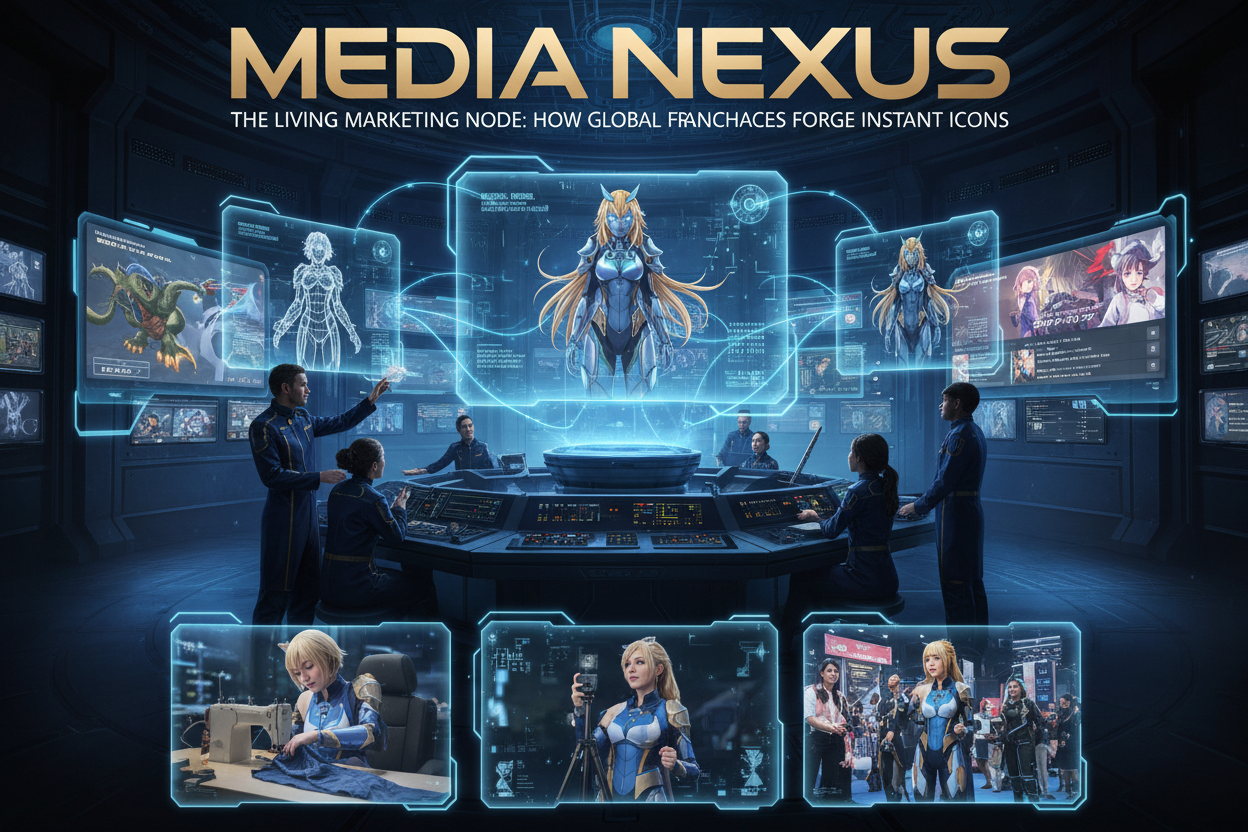
💡 Editorial Note: For years, entertainment conglomerates viewed cosplay as a passive, reactive by-product of their intellectual property—something fans did after a game or anime achieved mainstream success. In 2026, that linear creation model is obsolete. As modern entertainment architecture matures into a hyper-connected Transmedia Storytelling Ecosystem, global media franchises have fundamentally inverted their production pipelines. Character designs are no longer isolated vectors; they are engineered from day one to serve as participatory media hubs. By optimizing outfits for structural fabric reality, cross-platform algorithmic discovery, and real-world replication, modern franchises have turned the global cosplay network into an official, decentralized marketing distribution node that synchronized global IP releases across gaming, animation, and social media networks.
1. The Transmedia Shift: Architectural Co-Design for the Physical World
In 2026, the traditional distinction between content consumption and content participation has broken down entirely. Entertainment conglomerates no longer design characters solely to fit the technical limitations of an in-game rendering engine or the budget of an animation studio. Instead, they design characters to survive the transition into real-world, physical replication.
[ Traditional IP Distribution Pipeline ]
Game/Anime Launch ──> Audience Consumption ──> Slow, Reactive Fan Cosplay (Linear Path)

[ 2026 Transmedia Ecosystem Loop ]
Co-Designed Character Assets (Game + Anime + Fabric Framework)
       │
       ▼
Simultaneous Cross-Platform Drop (Global Media Event)
       │
       ▼
Instant Cosplay Activation ──> Algorithmic Viral Discovery ──> Real-World IP Nodes
This structural inversion is driven by a stark reality: in a fragmented digital landscape, a piece of corporate media cannot cut through the noise through traditional advertising alone. It requires distributed human networks. By synchronizing character drops across mobile gaming titles, television animation, and real-world costume specifications, studios ensure that when an IP debuts, hundreds of physical brand ambassadors are already flooding short-form video discovery feeds, serving as highly trusted, organic distribution channels for the franchise.
2. Engineering for the Feed: Algorithmic Geometry and Textile Viability
To turn a fictional character into a high-frequency transmedia asset, concept artists work alongside structural pattern makers during the initial pre-production phases. This discipline relies on two strict engineering mandates:
⚙️ Geometric Algorithmic Contrast
Characters engineered for modern transmedia distribution must pop instantly on a mobile phone display. Concept artists deliberately use high-contrast color theory, unique asymmetrical silhouettes, and distinct focal points (such as specialized glowing accents or high-impact headwear). These visual elements are chosen because they maximize the Click-Through Rate (CTR) on video discovery feeds, ensuring that when an independent creator wears the design, the platform’s recommendation engine pushes the content into mainstream feeds.
⚙️ Practical Fabric Translation
In 2026, leading entertainment companies regularly release official, high-resolution Asset Fabrication Guides alongside a character's media reveal. These corporate packages include exact vector embroidery files, recommended textile weight charts, 3D printing blueprints for complex hardware props, and flat pattern schematics. By reducing the technical barrier to entry for pattern making, the studio guarantees that master craftspeople can manufacture accurate, high-fidelity replicas within days of the initial corporate announcement, turning the global community into a rapid-response marketing force.
📊 3. The Ecosystem Matrix: The Modern Transmedia Production Loop
The following architectural matrix breaks down how modern 2026 intellectual properties are engineered across synchronized media channels to turn character costumes into active network nodes.
| Target Character Concept | Primary Media Anchors | Core Transmedia Design Hook | Official Developer Fabrication Asset Provided | Primary Algorithmic Node Capitalized | Mainstream Consumer Outreach Vehicle |
| Cyberpunk Tech-Runner | Open-World RPG + Anime Spin-off + TikTok Shorts | Luminescent LED channeling and high-contrast tactical streetwear | Official 3D CAD files for weapon props & pre-coded lighting matrices | High-specular contrast indexing on dark short-form feeds | Tech-wear consumer integration & urban lifestyle marketing |
| Urban-Fantasy Urban-Mecha | Cross-Platform Action RPG + Manga + YouTube Live | High-mobility industrial joints, oversized mechanical arms, and asymmetrical tech-harnesses | Vector graphics for decals & flat engineering textile layout guides | Geometric silhouette distortion flags (High Discovery Multiplier) | Extreme mechanical crafting & technical design communities |
| Gothic-Steampunk Chrono-Agent | Strategy Game + Cinematic Shorts + Instagram Reels | Victorian historical corsetry fused with futuristic gear components | High-resolution material shader maps & intricate lace vector patterns | Texture density contrast recognition (AI Quality Elevation Filter) | High-end fashion editorial features & textile craft showcases |
| Pop-Idol Virtual Combatant | Rhythm Game + Virtual Concerts + Twitch Streaming | Iridescent performance wear, fluid gradient fabrics, and reflective stage armor | Custom color-palette hexadecimal charts & layered fabric structural guides | Movement-vector tracking optimization for dance choreography | High-frequency live streaming & interactive gaming entertainment |
📋 4. Case Studies: The 2026 IPs Built for Participatory Distribution
To evaluate how these corporate transmedia design methodologies operate in real-world environments, we reverse-engineer four prominent character models that exemplify the modern participatory media loop.
1. Lucy — Cyberpunk: Edgerunners
The Transmedia Ecosystem Link
Lucy represents a flawless execution of the Cross-Media Synergistic Launch Strategy. Her character architecture binds CD Projekt Red’s open-world gaming universe with Studio Trigger’s high-energy animation style, utilizing short-form social media as the primary discovery layer.
The Engineered Design Blueprint
Lucy’s visual layout was meticulously optimized for real-world viral replication. Her minimalist, high-contrast white bodysuit paired with a dark, asymmetrical cropped jacket creates a highly recognizable geometric silhouette that pop-culture audiences can identify in less than a second on a scrolling timeline.
Furthermore, her pastel gradient hairstyle and glowing, luminescent wire accents provide immediate specular contrast under variable studio lighting. By releasing official, ultra-high-resolution texture maps and hair color hexadecimal values directly to the public upon the anime’s announcement, the studio enabled elite creators to flood short-form video platforms with highly viral, real-world representations of the character on the exact day of the broadcast premiere, creating an overwhelming, decentralized marketing blitz.
2. Ellen Joe — Zenless Zone Zero
The Transmedia Ecosystem Link
As a pillar character within HoYoverse’s 2024–2026 urban-fantasy ecosystem, Ellen Joe is built to bridge the gap between hyper-stylized action-gaming animation, serialized web-manga releases, and interactive, live-streaming entertainment.
The Engineered Design Blueprint
Ellen Joe’s design showcases an advanced understanding of the Subcultural Visual Hook. By blending the classic, universally recognized aesthetic of a traditional maid uniform with aggressive, industrial urban-mecha components—most notably her massive, mechanically complex shark tail appendage—the design hits multiple high-engagement collector categories simultaneously.
The structure of the costume is built intentionally to thrive in live video formats. The high-contrast black-and-white color palette of her dress keeps her visual presentation sharp against dynamic, shifting streaming backgrounds, while the sheer physical scale of the mechanical tail creates massive interest on social discovery feeds. The design acts as a powerful piece of visual engineering that drives immense organic engagement, turning every creator who portrays her into a highly effective distribution point for the gaming franchise.
3. Ahri (The Ruined King / Spirit Blossom) — League of Legends / Runeterra Universe
The Transmedia Ecosystem Link
Riot Games' deployment of Ahri across diverse thematic iterations showcases how a singular character asset can serve as a multi-channel narrative platform, connecting PC MOBA gaming, single-player console RPGs (Ruined King), cinematic music videos, and global lifestyle branding.
The Engineered Design Blueprint
In her Ruined King and Spirit Blossom variations, Ahri’s design elements are calculated to exploit Textile Materiality Filters. The complex, flowing traditional Eastern silhouettes are updated with high-contrast color bands, stylized visual geometry, and voluminous, multi-layered ethereal tails.
Riot’s concept teams deliberately design these elements with realistic textile physical properties in mind—avoiding floating, impossible shapes in favor of clear structural joints. When the studio releases comprehensive character design bibles detailing the exact layering of her kimono robes and the internal skeletal structure of her tails, they are actively funding their own decentralized marketing campaign. The resulting high-fidelity physical costumes dominate convention floors and digital editorial columns, reinforcing the franchise's premium status across the global media landscape.
4. 2B — NieR: Automata
The Transmedia Ecosystem Link
2B stands as the modern pioneer of the Transmedia Lifecycle Extension model. Long after the initial launch of her core action-RPG title, her design has continuously anchored major cross-media expansions—including high-budget anime adaptions, extensive cross-platform gaming collaborations, and continuous social media trends.
The Engineered Design Blueprint
Designed by Akihiko Yoshida, 2B is a masterclass in Minimalist Fashion Semiotics. Her monochromatic, gothic-lolita inspired dress, paired with high-contrast white hair, thigh-high suede boots, and a striking black tactical visor, creates a visually commanding presentation that requires no prior narrative knowledge to appreciate.
The inclusion of the tactical visor is a genius structural decision: it covers the performer's eyes, eliminating the complex requirement of matching specific facial shapes or expressions. This structural choice vastly lowers the barrier to entry for international creators, allowing anyone to achieve an authentic, high-fidelity portrayal. By maximizing the accessibility of the costume while maintaining an elite, haute-couture aesthetic, the design maintains a permanent, viral presence across global media streams, effortlessly driving new generations of consumers back to the primary gaming franchise.
5. The Creative Friction: Corporate Manipulation vs. Subcultural Autonomy
The systematic engineering of characters to exploit the global cosplay community has triggered an intense ideological debate within the creative subculture.
┌─────────────────────────────────────────────────────────────────────────────────────────┐
| r/transmedia_marketing • Posted by u/Subcultural_Watcher • 4 days ago                     |
| ⚙️ The Industrialization of Fandom: Are We Creators or Unpaid Marketing Nodes?          |
|                                                                                         |
| I feel incredibly conflicted looking at modern character design bibles from major       |
| studios. When a developer hands us pre-packaged pattern files and fabric guides on     |
| day one, they aren't supporting our creativity—they are outsourcing their ad budget.     |
|                                                                                         |
| They design characters like Ellen Joe or Lucy to function as pure engagement-bait for   |
| social media algorithms. When we build these costumes, we aren't creating fan art; we   |
| are acting as unpaid distribution nodes for multi-billion dollar transmedia engines.    |
|                                                                                         |
| Has the genuine passion of the craft been completely captured by corporate systems?      |
|                                                                                         |
| 💬 2.1k Comments  |  Share  |  Save  |  Hide                                           |
+-----------------------------------------------------------------------------------------+
📉 The Purist Critique: The Corporate Capture of Fandom Passion
Critics of this modern design trend argue that the industrialization of character design represents a sophisticated corporate capture of authentic fan passion. They point out that when studios engineer costumes with the primary goal of maximizing algorithmic social media metrics, they reduce a diverse, grassroots art form into an extension of corporate marketing departments. The release of pre-packaged fabrication guides is seen as a tactical calculation to outsource promotional labor onto independent creators, who spend immense amounts of personal capital and time building outfits that ultimately serve to pump up the active user metrics and stock values of multi-billion-dollar media conglomerates.
📉 The Pragmatic Defense: Mutually Beneficial Creative Symmetry
Conversely, pragmatic fabricators and transmedia producers argue that this integration represents a highly supportive, mutually beneficial partnership between IP owners and the creative community. By providing professional design guides, clear asset sheets, and structurally viable patterns, studios demonstrate genuine respect for the material reality of the craft, moving away from impossible, poorly planned designs of the past. This structural support drastically reduces the financial and technical risks born by independent creators, giving them an efficient, reliable path to capture global visibility and build their own professional portfolios off the back of major global media releases.
6. ❓ Frequently Asked Questions (FAQ)
Q: Do media companies officially contract cosplayers to achieve these synchronized transmedia launches?
A: While major studios routinely hire elite, top-tier influencers for official promotional campaigns on convention floors, the overwhelming majority of this transmedia distribution relies on organic, un-contracted community participation. By lowering the engineering barriers to entry through the release of official fabrication bibles, studios rely on the community's natural desire to tackle popular, well-designed characters to drive the organic viral wave.
Q: How do algorithms differentiate between official corporate content and user-generated costumed media?
A: Modern 2026 search and recommendation engines do not separate the two; instead, they treat them as a singular, unified IP engagement cluster. When a user-generated costume video goes viral on a discovery feed, the algorithm instantly indexes the video using the game’s official tags, driving traffic back to the primary brand, while simultaneously lifting the creator’s personal visibility—creating a tight, compounding loop of shared media value.
🎯 Conclusion: The Creator is the Ultimate Infrastructure
The rapid evolution of character design within global transmedia storytelling ecosystems confirms a vital truth about the future of modern digital entertainment: the final product is no longer contained within the code of a game or the frames of an animation; it is completed by the community in the physical world.
Franchises have successfully moved past the outdated model of static, linear media delivery. By treating character design as an architectural blueprint for real-world execution, entertainment companies have unlocked a massive, decentralized engine of creative energy.
Whether optimizing the striking, high-contrast streetwear aesthetic of Lucy to capture short-form discovery feeds, engineering the intricate, high-mobility industrial patterns of Ellen Joe to dominate live interactive streaming, mapping the flawless textile layers of Ahri to elevate visual culture assets, or streamlining the timeless, accessible fashion semiotics of 2B to secure a multi-year media lifecycle—global entertainment franchises are proving that in the modern creator economy, the most valuable infrastructure a brand can build is an authentic, highly empowered, and structurally integrated community of master craftspeople.

Leave a comment
This site is protected by hCaptcha and the hCaptcha Privacy Policy and Terms of Service apply.