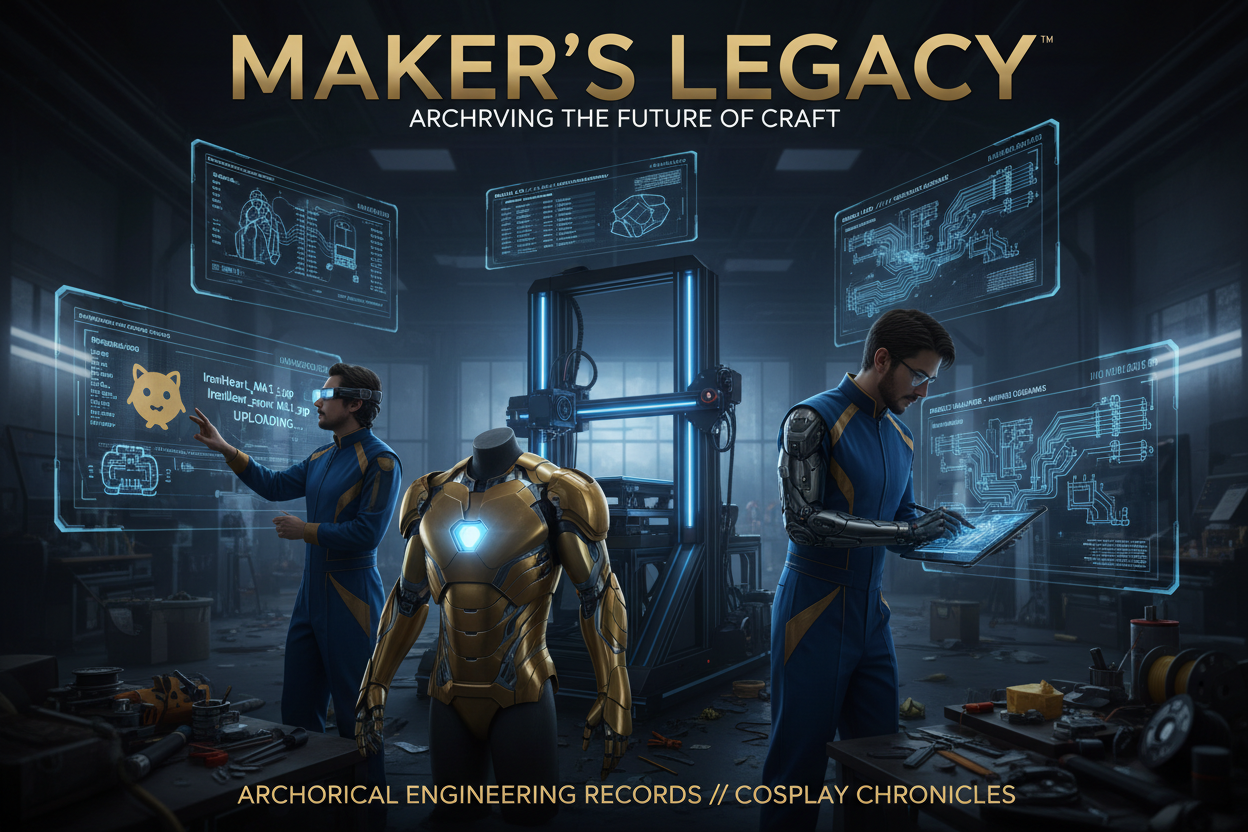
💡 Systemic Briefing: A profound transformation is redefining global maker communities. The metric of success within premium subcultural spaces has undergone a structural inversion: the focus has shifted from The Product (the finalized, retouched presentation photo) to The Process (the hyper-detailed technical construction log). This movement represents a massive leap in Craft Documentation and Maker Culture. Driven by open-source collaboration and the need to prevent technical skill loss, contemporary creators are no longer just sewing outfits; they are operating as specialized design engineers. By systematically preserving 3D garment patterns, electronic schematics, and chemical material logs, these makers are building an immutable technical archive that treats avant-garde pop-culture fabrication as a legitimate form of modern industrial heritage.
1. The Maker Paradigm: From Finished Product to Process Capital
The traditional era of cosplay consumption was heavily focused on the final optical illusion. Creators spent months hidden in baseline workshops, appearing publicly only when the garment was completed to capture a static, retouched image grid for social media algorithms. Once the convention loop ended, the structural knowledge used to build that garment was routinely lost.
[ LEGACY VISUAL PARADIGM ]
Secret Workshop Isolation ──► Finished Garment Photo ──► Algorithmic Decay (Knowledge Lost)

[ 2026 MAKER DOCUMENTATION MODEL ]
Step-by-Step Build Log ──► 3D Pattern/Schematic Vault ──► Open-Source Asset Distribution ──► Cultural Heritage
In 2026, the proliferation of Maker Culture has turned the construction phase into the primary source of cultural capital. Audiences and fellow fabricators no longer just want to see the finished suit; they demand the Build Log—the technical history detailing how the maker solved complex physics problems, managed material failures, and engineered 2D concept art into a wearable 3D structure. Documentation is the new performance, and the pattern files themselves have become highly valued subcultural assets.
📋 2. The Technical Blueprints: Four Case Studies in Advanced Craft Documentation
To understand how this engineering-level archiving operates in practice, we look at four complex character setups, breaking down the exact technical blueprints and pattern data that contemporary makers are preserving for the historical record.
1. Iron Man (Marvel/Sci-Fi Classic) — Micro-Industrial Automation and Electronic Architecture Archives
🧬 The Craft Documentation Node
Building a high-fidelity Iron Man armor suite has evolved into a masterclass in independent micro-industrial manufacturing. Makers are moving away from basic hand-cut foam, archiving instead the complete digital pipelines for automated production.
┌────────────────────────────────────────────────────────────────────────┐
│ [CRAFT DOCUMENTATION SPEC: IRON MAN MK 85 MECHATRONIC ARMOR]          │
│                                                                        │
│   ├─── [3D PRINTING TOPOLOGY LAYER] ──────────────────────┐            │
│   │    File: .STL Matrix / High-Impact PETG Composite     │            │
│   │                                                       │            │
│   ├─── [MECHATRONIC SCHEMATIC INFRASTRUCTURE] ────────┐   │            │
│   │    Processor: Arduino Nano / 5V Servo Array       │   │            │
│   │    System: Magnetic Limit Switch Trigger          │   │            │
│   │                                                   │   │            │
│   │              [SURFACE FINISHING LOG]              │   │            │
│   │             ┌────────────────────────────┐        │   │            │
│   │             │   Automotive High-Build    │        │   │            │
│   └────────────►│   Polyurethane Primer Log  │◄───────┴───┘            │
│                 │   Chemical Curing Matrices │                         │
│                 └────────────────────────────┘                        │
└────────────────────────────────────────────────────────────────────────┘
🛠️ Archived Assets
The modern Iron Man build archive is an exhaustive industrial file bundle. It features precise 3D printing layout files (.STL matrices) configured for high-impact PETG composite filaments, along with detailed mechatronic wiring diagrams for Arduino Nano microcontrollers that automate the motorized faceplate and weapon pods.
Crucially, these logs include chemical spray diaries tracking automotive-grade polyurethane primer applications and multi-stage candy-apple paint curing times. Preserving these records ensures that future makers can replicate complex mechanical shells without suffering surface warping or electrical failure.
2. Akali & Gwen (League of Legends) — High-Velocity Street Techwear and Kinetic Structural Patterning
🧬 The Craft Documentation Node
This dual-character framework balances the sharp, asymmetric urban techwear of K/DA Akali with the massive, hyper-exaggerated fairy-tale architecture of Gwen. The primary engineering hurdle is managing massive material scale and high-mobility garment stress.
                    [ GWEN & AKALI KINETIC RECONSTRUCT ]

                         ▲  [Gwen: Scissors Core]
                         │  (Carbon Fiber / Lightweight EVA)
                         │
                ┌────────┴────────┐
                │                 │
                │ (Kinetic Load)  │
                ▼                 ▼
       ┌───────────────────────────────────┐
       │     THE GARMENT ENGINEERING LAB   │
       ├───────────────────────────────────┤
       │ Vector Pattern Archives Active:   │
       │ • Akali: Asymmetric Jacket Cad    │
       │ • Gwen: High-Load Bodice Placket  │
       │ • Cross-Stress Reinforcement Logs │
       └───────────────────────────────────┘
🛠️ Archived Assets
For Akali, makers archive digital CAD sewing files for her irregular, heavy-weight satin souvenir bomber jackets, noting the exact stabilizer steps needed to hold clean embroidery lines on high-gloss stretch textiles.
For Gwen, the archive holds the architectural blueprint for her massive, 2-meter scissors. This log documents the transition from a heavy wood core to an ultra-lightweight carbon-fiber rod internal chassis wrapped in CNC-milled density EVA foam.
Alongside this, makers upload the specific pattern adjustments made to Gwen's classic bodice, detailing how to reinforce internal structural seams so the garment supports the leverage of the weapon without tearing the shoulder seams.
3. Raiden Shogun (Genshin Impact) — The Convergence of Classical Kimono Deconstruction and Rigid Armor Synthesis
🧬 The Craft Documentation Node
The Raiden Shogun’s attire demands a flawless marriage between traditional Japanese drapery and structured, gravity-defying video game silhouettes. It requires translating flat, illustrated textures into high-dimension, layered luxury armor.
                  [ RAIDEN SHOGUN MATERIAL DECONSTRUCTION ]

                    ┌───────────────────────────┐
                    │  Traditional Kimono Line  │
                    │  (Jacquard Silk / Obi)    │
                    └─────────────┬─────────────┘
                                  │
                                  ▼
                    ┌───────────────────────────┐
                    │  Rigid Structural Fusion  │
                    │  (Thermoplastic Molding)  │
                    └─────────────┬─────────────┘
                                  │
                                  ▼
                    ┌───────────────────────────┐
                    │  High-Density Vector Print│
                    │  (Laser Gold Hot-Stamping)│
                    └───────────────────────────┘
🛠️ Archived Assets
The craft records for the Raiden Shogun focus heavily on pattern deconstruction logs. Makers preserve the precise layout maps for her asymmetrical Obi belt and draped sleeves, specifying how traditional jacquard silks must be fused with internal canvas interlinings to maintain their rigid, geometric look on a live stage.
The archive preserves the digital files for the gold hot-stamping stencils and the thermal molding templates for her lacquered shoulder pauldrons. By saving these mixed-media processing steps, the community protects the delicate knowledge required to seamlessly bond soft heritage silks with hard, modern plastics.
4. Makima (Chainsaw Man / Pop Culture Cross-Over) — High-Tailoring Precision and Psychological Silhouetting
🧬 The Craft Documentation Node
Note: Correcting original transcription typos to address the definitive cultural footprint of the iconic public safety leader, Makima. Her design is an exercise in extreme, hyper-precise minimalism. Unlike fantasy armor, a crisp, professional uniform leaves absolutely no room for error or concealment; every single seam line must be flawless.
🛠️ Archived Assets
Makers archiving the construction of this iconic uniform preserve high-end bespoke tailoring master patterns. The documentation focuses on the exact calculations used to draft her signature high-waisted dress trousers and the crisp, double-breasted dress shirt.
These archives detail the precise choice of interlining weights for the shirt collar and placket, ensuring it stays completely flat and sharp during long performance loops.
By saving these traditional, fine-tailoring construction steps, the community creates a valuable textbook for minimalist costume design, proving that clean lines and impeccable fit carry just as much narrative power as massive, complex prop weapons.
📊 3. The Manufacturing Registry: Engineering Matrix of Contemporary Icons
The following matrix categorizes the specific technical fields, digital assets, and structural solutions being preserved across the community's independent craft archives.
| Character Target Node | Primary Craft Field | Core Digital Asset Preserved | Specific Structural Solution | Archive Longevity Value |
|
Iron Man (Marvel / Sci-Fi) |
Mechatronics & Additive Manufacturing. | .STL 3D Print Matrices & Arduino C++ Source Code. | Motorized faceplates with magnetic limit switch triggers. | Prevents technical loss in electronic integration and automotive painting steps. |
|
Akali & Gwen (League of Legends) |
Heavy Tailoring & Heavy Prop Engineering. | .DXF Vector Sewing Files & CNC Router Toolpaths. | Carbon-fiber internal rod chassis for 2-meter lightweight props. | Provides blueprints for balancing weapon weight with garment seam stress. |
|
Raiden Shogun (Genshin Impact) |
Mixed-Media Textile Deconstruction. | Laser Hot-Stamping Vectors & Thermoforming Templates. | Fusing traditional jacquard silk with rigid canvas interlinings. | Preserves the delicate techniques needed to bond soft fabrics with hard plastics. |
|
Makima (Chainsaw Man Subvert) |
Bespoke Fine Tailoring & Pattern Drafting. | High-Waisted Trouser Master Drafts & Interlining Specs. | Custom collar stabilization and high-precision sleeve-cap setting. | Acts as a fundamental textbook for crisp, minimalist uniform engineering. |
4. Open-Source Mechanics: The Open Textile Infrastructure
The structural shift toward comprehensive craft archiving has unlocked a massive wave of open-source collaboration within the global maker community. Historically, custom pattern secrets were closely guarded by boutique fabricators to protect their commercial advantage. Today, the maker movement has embraced a culture of shared knowledge, similar to the open-source ethos of the software industry.
┌─────────────────────────────────────────────────────────────────────────────────────────┐
| r/maker_culture • Posted by u/Pattern_Engineer_2026 • 2 days ago                         |
| 🧵 Why I’m Open-Sourcing My Entire 3D Garment Pattern Library on GitHub                 |
|                                                                                         |
| After spending 3 months debugging the sleeve-cap translation for my Raiden Shogun       |
| silk build, I realized something: keeping these pattern files locked on my hard drive    |
| does nothing for the community. If my laptop dies, that engineering work is gone.        |
|                                                                                         |
| I’ve officially uploaded all my .DXF vector patterns, 3D clothing print files, and     |
| sewing sequence logs to an open repository. Now, anyone running an independent studio    |
| or working out of their garage can download these files, skip the trial-and-error        |
| phase, and start building directly on top of my structural work. Let's build together!  |
|                                                                                         |
| 💬 4.2k Comments  |  Share  |  Save  |  Hide                                           |
+------------------------------------------------─────────────────────────────────────────┘
By uploading pattern files to shared platforms like GitHub, Thingiverse, and specialized subcultural wikis, veteran creators ensure their hard-won technical breakthroughs are preserved.
A beginner looking to build an articulated armor suit or draft a complex, asymmetric jacket no longer has to start from zero. They can download an archived, community-tested file repository, analyze the failure logs, and focus their energy on advancing the craft even further.
5. ❓ Frequently Asked Questions (FAQ)
Q: Does archiving these digital patterns and code files take away from the traditional, hands-on spirit of physical crafting?
A: Not at all. Digital documentation simply acts as an advanced tool that supports physical handcrafting. Having access to an archived 3D file or a vector sewing pattern still requires the maker to master hands-on skills—like operating a 3D printer, selecting the right fabric grain lines, tailoring the garment to a human body, and hand-finishing details. Documentation handles the tedious math, leaving more room for creative physical artistry.
Q: Are independent makers worried that open-sourcing their build logs will make it easier for mass-production factories to copy their work?
A: While mass-production factories can look at open build logs, the premium, custom-made market operates on a completely different level than cheap mass-production. High-tier cosplay documentation focuses on bespoke tailoring and complex, custom prop engineering that is too labor-intensive for mass assembly lines. Sharing these logs helps other independent makers refine their custom skills, which actually widens the quality gap between unique handmade art and cheap factory alternatives.
Q: What are the best digital file formats for long-term craft preservation?
A: The community relies heavily on open, non-proprietary file formats to prevent software obsolescence. For sewing patterns and vector shapes, .DXF (Drawing Exchange Format) or clean .SVG files are preferred over closed software formats. For mechatronic components, clean C++ source code (.ino files) accompanied by universal schematic images ensures that these technical guides remain fully readable and useful for decades.
🎯 Conclusion: The Living Blueprint of Subcultural Artistry
The growing movement toward meticulous craft documentation proves that the modern global maker community has fully come of age. By treating their construction steps, pattern iterations, and material challenges as valuable historical records, these creators are elevating pop-culture fabrication into a respected field of modern design engineering.
These archives preserve the incredible ingenuity and problem-solving skills of a highly talented generation of makers. Because the community takes the time to save these digital and physical blueprints, the hard-won techniques developed today will never fade away. They will serve as a permanent, accessible foundation, inspiring and guiding the global handmade movement for generations to come.

Leave a comment
This site is protected by hCaptcha and the hCaptcha Privacy Policy and Terms of Service apply.