Table of Contents
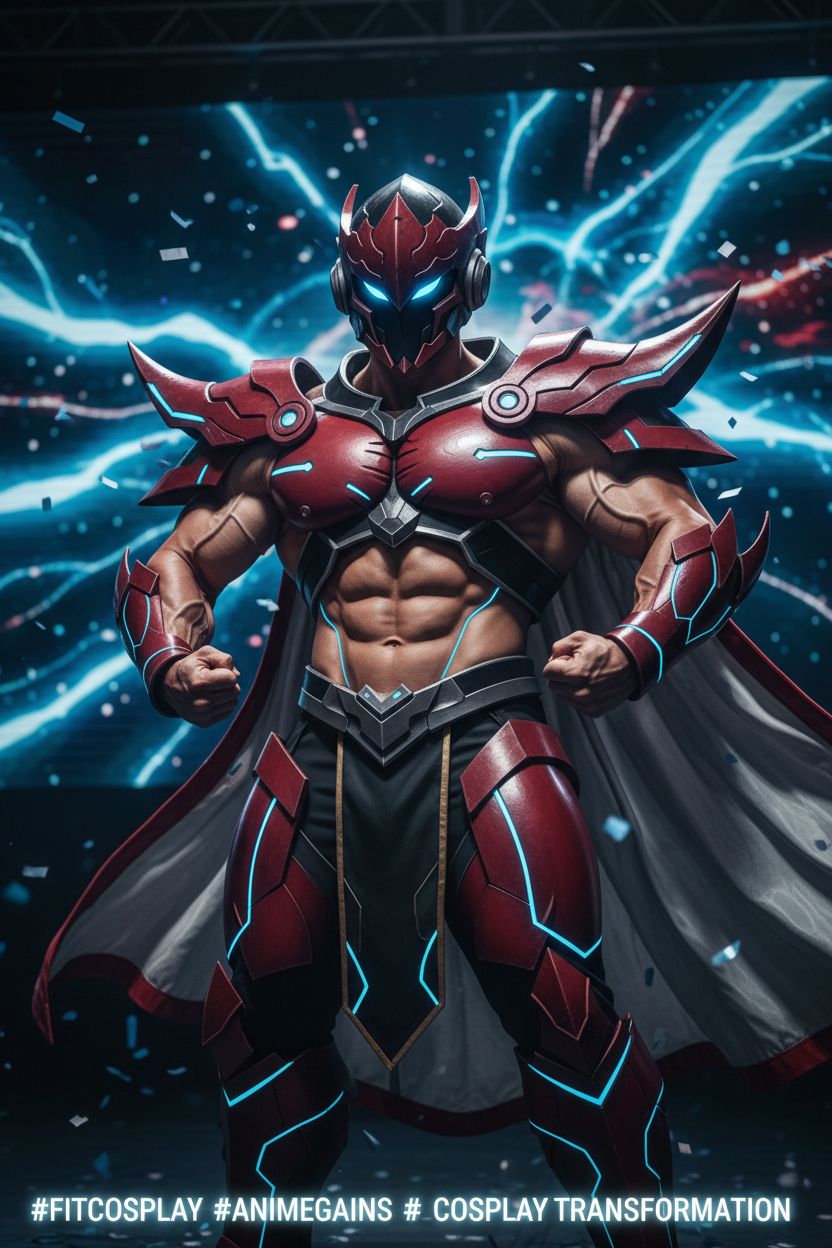
Fitness culture and cosplay have fully collided on TikTok, and the crossover is pulling in an audience well beyond the usual anime and gaming crowd. Under tags like #FitCosplay and #AnimeGains, creators are cosplaying powerhouse characters — Toji Fushiguro and Sukuna from Jujutsu Kaisen, Dragon Ball's Saiyans, Street Fighter's Juri — and pairing the costume with a visibly built physique, often shown through training-progress clips or dramatic transition videos. It's also sparked its own inverse trend, sometimes called "muscle mommy" cosplay, where women cosplay traditionally hyper-muscular characters and lean into strength as the aesthetic.
This guide covers how the trend actually works, the real (and very different) paths people take to pull it off, and how to approach it without falling into unrealistic expectations about your own body.
Chapter 1: What Fit Cosplay Actually Means
Fit Cosplay, at its core, is cosplay built around characters whose design is defined by visible physical power — broad shoulders, defined muscle, an imposing build — where part of the costume's impact depends on the cosplayer's own physique reading as strong on camera. This is a meaningful departure from most cosplay categories, where fabric, wig work, and prop-building carry almost all the visual weight. Here, the body itself becomes part of the "costume," which is exactly what's made this trend both so viral and so easy to misunderstand.
It's worth being clear from the start that there isn't one single "correct" way to do this. Some creators genuinely train for months or years with a specific character's build in mind, treating the process as long-term fitness motivation. Others achieve the same visual effect through costume engineering — muscle suits, padded bodysuits, and shading techniques — without changing their actual body at all. A large and growing portion of the community does some blend of both: modest, sustainable training paired with costume tools that do the rest of the visual work. All three approaches show up constantly in top-performing #FitCosplay content, and understanding that range matters before you decide which path fits you.
Chapter 2: Two Real Paths to a Powerful Physique on Camera
Path One: Training toward the look. If you want your own physique to carry part of the costume, the realistic framing is that this is a long-term fitness goal, not a costume prep task with a deadline. Meaningful, visible muscle development from resistance training typically takes many months of consistent effort, not weeks, and how quickly (or whether) a specific look is achievable depends heavily on individual factors like body type, training history, and genetics — a specific anime character's proportions may simply not be a realistic or healthy target for every body. If you go this route, the healthiest approach is to treat it as general strength training with a character as loose inspiration, working with a qualified trainer or coach if you're new to resistance training, prioritizing sustainable progress over rapid change, and keeping your training and eating patterns something you could maintain long-term rather than a short-term push. If a con date is approaching and your training goal isn't realistic in that window, that's a completely normal outcome — not a failure — and it's exactly why the second path exists.
Path Two: Costume engineering. This is the path that actually makes Fit Cosplay accessible to far more people than a training-only approach ever could, and it's a completely legitimate craft in its own right, not a "lesser" option. Silicone and foam-padded muscle suits — the same category of product used in film and stage costuming — have become widely available and increasingly realistic, letting a cosplayer achieve a dramatic, anatomically convincing physique instantly, reusably, and without any change to their actual body. Paired with the right wig, posing, and lighting, a well-fitted muscle suit reads just as convincingly on camera as months of training would, and a huge share of the most-viewed "skinny to superhuman" transformation clips on TikTok right now are showcasing exactly this kind of suit, not a real body transformation. This path also opens the trend up to cosplayers whose body type, health situation, or personal preference makes intensive physique training unrealistic or simply undesirable — which is a meaningful part of why this corner of cosplay has stayed as inclusive as it has despite its intense, muscle-focused aesthetic.
Chapter 3: Advanced Techniques and Case Examples
Shading and contour work is the technique that elevates both paths from "good" to genuinely convincing. Bodybuilders have used dark, matte body makeup along muscle separations backstage at competitions for decades to make definition read clearly under stage lighting, and cosplayers have adapted the same principle directly. Applying a slightly darker, matte-finish body makeup into the natural (or suit-simulated) grooves between muscle groups — obliques, deltoid separation, ab lines — while keeping the raised areas lighter and slightly more reflective, dramatically increases how much definition the camera actually picks up, especially under the harder, more directional lighting typical of con photography.
Lighting and posing do nearly as much work as the physique itself. Side or slightly raking light (rather than flat, front-on lighting) is what actually reveals muscle definition in a photo — flat lighting flattens everything, suit or real physique alike. Classic strength-pose fundamentals — a slight forward lean, controlled tension through the shoulders and arms, camera positioned slightly below eye level to add a sense of scale — are borrowed directly from bodybuilding and fitness photography and translate well to character posing for strength-focused characters.
Real-world examples worth studying: convention floors have seen cosplayers combine a full character wig and armor pieces with a specialized muscle bodysuit rather than natural physique alone, proving the suit route can hold up even at major, high-traffic events under close photo scrutiny. On the training side, plenty of creators document months-long "anime physique" training arcs specifically framed around a target character, using the character as a motivational anchor rather than expecting to hit an exact match — which is a healthier way to frame the goal than treating a stylized character design as a literal body target.
Chapter 4: Tools and Resources
-
Silicone or foam muscle suits and padded bodysuits — the core tool for the costume-engineering path; look for suits with anatomically accurate muscle placement and a finish that takes body paint or makeup well, since a suit that can't be shaded convincingly will look flat under photography lighting.
-
Matte body makeup or theatrical contour kits — for shading muscle definition on both real and suit-based physiques; matte finishes photograph far better than shimmer or dewy finishes for this specific effect, since shine tends to flatten definition under flash photography.
-
Compression and shapewear layers — useful under a muscle suit for a smoother fit, or on their own for cosplayers who want a subtler, more streamlined silhouette without a full suit.
-
Basic resistance training equipment (resistance bands, adjustable dumbbells) — a reasonable starting point if you're exploring the training path at home, though working with a trainer in person is worth it if you're serious about a longer-term program.
-
A tripod and off-camera light or reflector — since side lighting is one of the single biggest factors in whether definition actually reads on camera, regardless of which path you're taking.
Frequently Asked Questions
Do I need to actually build muscle to do Fit Cosplay?
No. Muscle suits and shading techniques are a legitimate, widely used, and genuinely popular path within this trend — a large share of the most dramatic "transformation" content people admire is achieved this way, not through real body change.
How long does it realistically take to build a visibly different physique through training?
This varies enormously by individual, and there's no universal timeline — meaningful visible change from consistent resistance training generally takes sustained effort over a period of months at minimum, not weeks. If you're pursuing this path, working with a trainer to set realistic, healthy expectations for your specific body is more useful than aiming for a fixed deadline or a specific character's exact proportions.
Will a muscle suit look fake in photos?
Not if it's well-fitted and shaded properly. Poor lighting and a suit that doesn't take body makeup well are the two most common reasons a muscle suit reads as costume-y rather than convincing — both are fixable with the right gear and setup covered in Chapter 3.
Is this trend only for men?
Not at all. The "muscle mommy" side of this trend, where women cosplay powerfully-built characters and lean fully into a strong, muscular aesthetic, is one of the fastest-growing corners of Fit Cosplay right now.
Is it healthy to chase a specific anime character's body proportions through training?
Approach this carefully. Stylized character designs are often exaggerated well beyond realistic human proportions, and treating one as a literal, fixed body target — rather than loose inspiration for a general strength goal — can set up expectations that aren't healthy or achievable for your individual body. If you notice yourself becoming distressed about your body or falling into rigid, punishing training or eating patterns while pursuing this, it's worth stepping back and talking to a doctor or a mental health professional — and the costume-engineering path is always there as a way to get the visual result without that pressure.
Summary and Related Resources
Fit Cosplay's crossover appeal comes from combining two passionate communities, but the trend is genuinely at its best when it's treated as a spectrum rather than a single standard — real training, costume engineering, or some blend of both are all legitimate ways to bring a powerful character to life.
If you're building your next strength-character look, check out our guides on choosing and fitting a realistic muscle suit, body-safe contour makeup techniques for convention lighting, and posing tips for strength-focused character photography.


Leave a comment
This site is protected by hCaptcha and the hCaptcha Privacy Policy and Terms of Service apply.