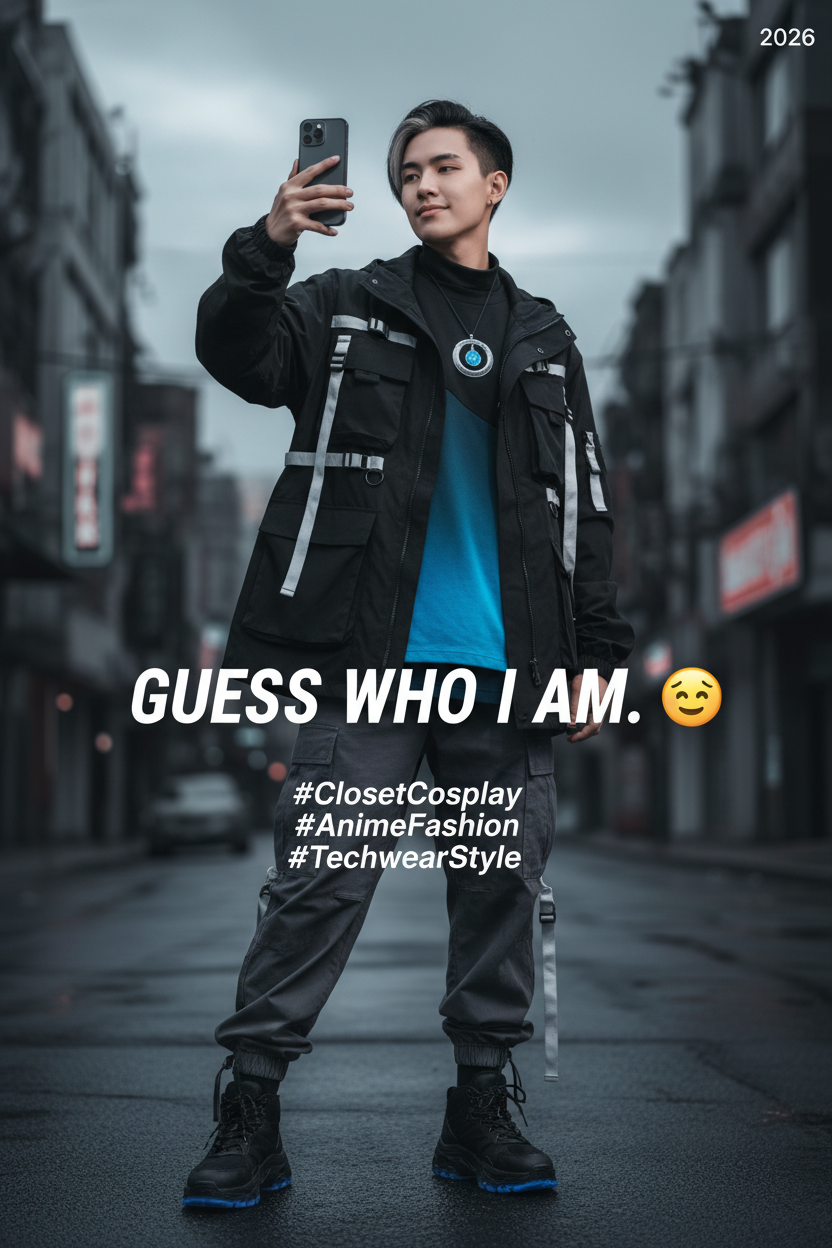
TL;DR: Closet cosplay (also called casual cosplay) is the practice of building a character's look using everyday, wearable clothing instead of a full constructed costume — techwear pieces for a Zenless Zone Zero or Cyberpunk character, Y2K streetwear for a Chainsaw Man look, thrifted workwear for grittier designs. It's exploding on TikTok in 2026 because it's cheaper, more comfortable, more repeatable across multiple posts, and it turns character recognition into a game — most closet cosplay videos are captioned "guess who I am" and let the comment section do the reveal.
Why Closet Cosplay Is Taking Over TikTok Right Now
Closet cosplay isn't new — cosplayers have thrown together low-budget looks with existing wardrobe pieces for years, often as a fallback when there wasn't time or money for a full build. What's changed in 2026 is the status of that approach. Industry trend coverage now describes closet cosplay as having been "rehabilitated" by both the cosplay community and mainstream fashion culture, shifting from a compromise into a deliberate style choice — a fashion-forward interpretation that nods to a character while still reading as a genuinely wearable outfit. That reframing matters, because it changes the entire creative brief: instead of asking "how do I build the most screen-accurate version of this costume," closet cosplay asks "how do I capture the character's silhouette and color story using pieces someone could plausibly wear to class or a coffee shop."
Several forces are driving this at once:
-
Comfort and practicality — A full armored costume or a floor-length gown isn't something you can wear on a travel day, run errands in, or repeat across multiple TikTok posts without a full re-build each time, while a closet cosplay outfit can be restyled and reworn constantly, which matters a lot for creators who need consistent content output.
-
Cost — Gen Z cosplayers are drawn to looks that use pieces already sitting in a thrifted wardrobe or a mainstream techwear/Y2K collection, rather than commissioning or sewing an expensive single-use costume.
-
Algorithmic fit — Probably most important for why this specific trend is winning on TikTok's algorithm: platform trend analysis has noted that recommendation systems are increasingly rewarding originality and creative interpretation over strict screen accuracy, which plays directly to closet cosplay's strengths — a clever, wearable reinterpretation of a character often earns more engagement than a technically perfect but visually familiar costume replica.
Put simply, this is a format built to win on the specific platform it lives on, not just a workaround for a limited budget.
Key Elements and Where the Trend Shows Up Most
The strongest closet cosplay looks are built the way a stylist approaches an editorial shoot: silhouette first, character-coded details second. Rather than starting with "what pieces does this character technically wear," the more effective approach starts with the character's overall shape and proportions — an oversized silhouette versus a fitted one, a long line versus a cropped one — and only then layers in the specific details that trigger recognition: color story, a signature accessory, hair styling, and eye color if lenses are part of the look.
This approach is showing up most in a handful of aesthetic lanes right now:
-
Techwear is a natural fit for character designs from games like Zenless Zone Zero or the broader cyberpunk aesthetic — utility straps, asymmetric zippers, tactical vests, and monochrome-with-one-accent-color palettes translate directly from a game character's design language into pieces that already exist in mainstream streetwear collections.
-
Y2K and "rah rah" streetwear — low-rise cargos, cropped layering pieces, chunky accessories — maps well onto sharper, more stylized character designs, including looks pulled from titles like Chainsaw Man, where a character's silhouette and signature color blocking can be captured through cut and proportion rather than literal costume pieces.
-
Thrifted workwear and formalwear are also a recurring toolkit, especially for characters defined by tailored coats, high collars, or structured layering — a dark, sleek coat and turtleneck combination, for instance, can imply a sharply dressed anime character just as effectively as a made-to-order replica, provided the silhouette and color read correctly on camera.
The interactive layer is just as important as the styling itself. Most high-performing closet cosplay videos are framed around a guessing game — a caption like "guess who I am without saying the name," sometimes paired with a slow reveal or a series of quick cuts showing accessories one at a time. This format works because it turns a passive viewing experience into an active one: the comment section becomes the actual payoff of the video, with viewers competing to name the character first, tagging friends, or debating between two similar-looking options. That interaction is a major reason closet cosplay videos routinely rack up view counts in the millions — the content isn't just "look at my outfit," it's a small puzzle the audience gets to solve together.
Common Mistakes and Things to Watch For
-
Drifting too literal with individual pieces: The most common closet cosplay mistake is drifting too literal with individual pieces, which breaks the entire premise of the trend. A single obviously costume-y item — a novelty prop, an overly on-the-nose graphic, or a piece that clearly isn't something anyone would wear outside a shoot — undercuts the "this is just my outfit" illusion that makes closet cosplay compelling in the first place. The strongest looks read as plausible streetwear first, with the character connection becoming clear only once you know what to look for.
-
Inconsistent or muddled color story: A second frequent issue is an inconsistent or muddled color story. Because closet cosplay leans so heavily on silhouette and palette to do the work that detailed costume pieces would normally do, a color combination that doesn't match cleanly to the character's actual palette makes the whole look harder to identify — which is a real problem for a trend built around comment-section guessing games. It's worth checking your planned outfit against reference art specifically for color blocking before finalizing pieces, rather than relying on "close enough."
-
Skipping a signature accessory or hair styling: Skipping a signature accessory or prop entirely is another common misstep. Even in a fully wearable outfit, one small, recognizable anchor point — a specific accessory shape, a piece of jewelry, a bag style, or a particular hair accessory — often does more to lock in recognition than three or four "close enough" clothing choices combined. Hair is frequently the other overlooked element: creators will spend significant effort on the outfit and then leave their natural hair untouched, when a well-chosen wig or even strategic styling of natural hair (color-matched clips, a specific part, a colored spray) often reads as more essential to recognition than any single clothing piece.
-
Overcomplicating the look: Finally, it's worth resisting the urge to overcomplicate the look by cramming in every possible detail from a character's design. Closet cosplay works because it's a distilled, wearable interpretation — trying to replicate every accessory and pattern from a source design usually pushes the outfit back toward costume territory and away from the "I would actually wear this" quality that makes the trend resonate in the first place.
Summary and Further Reading
Closet cosplay's rise on TikTok isn't a lowered bar for the community — it's a genuine styling discipline that rewards understanding a character's silhouette and color language over literal costume replication, and it happens to be perfectly suited to a platform that increasingly rewards creative reinterpretation and comment-section engagement over screen accuracy.
If you're planning your own closet cosplay look, check out our guides on building a techwear capsule wardrobe for cyberpunk-style characters , choosing wigs that work for both closet cosplay and full costume builds , and matching colored contacts to a character's palette as your next stops.

Leave a comment
This site is protected by hCaptcha and the hCaptcha Privacy Policy and Terms of Service apply.